Marshall Rare Books
Dissertatio inauguralis physico-medica, de magia naturali, ejusque usu medico ad magice at magica curandum
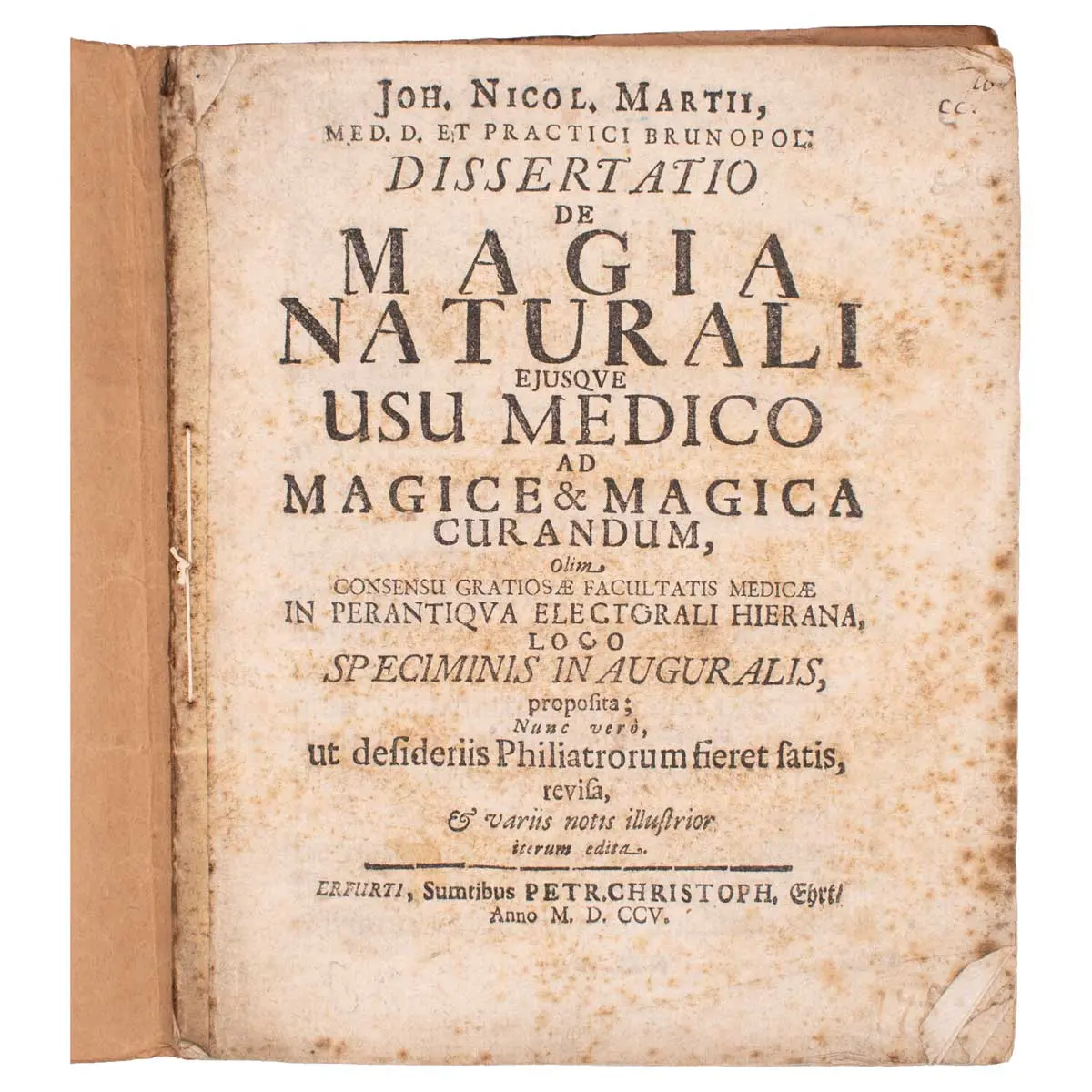
A fascinating glimpse into the popularisation of science and its overlap with popular and practical magic.
Second Edition, expanded to 78pp., latin text, pictorial woodcut initials, ornaments, later wrapper, some foxing to title but rest clean, 4to, Erfurt, Petr. Chrstoff, 1705.
A medical text about the ways in which sympathetic magic could be marshalled to provide remedies for common ailments, this work provides a fascinating glimpse into the popularisation of science at the time, and its overlap with popular and practical magic.
This work originally appeared as 44 pages in 1700. This second expanded edition was published five years later and was widely successful. This version would go on to be published in seven further editions, before it was translated into German and reworked into the better known “Unterricht Von der Magia Naturali und derselben Medicnischen Gebrauch auf Magische Weise,” (1779) by Johann Christian Wiegleb.
Not much is known about the author, Johann Nikolaus Martius, student of Justus Vesti in Erfurt, and later medicuspracticus in Braunschweig. Before he graduated, Martius was involved in the production of a dissertation on the ‘hermetic philosophy’ at Erfurt. Two years later he produced the first edition of this dissertation, inspired by Christian Thomasius’s Versuch vom Wesen des Geistes (1699), a work of eclectic, Neoplatonic-infused pneumatology.
Dissertatio inauguralis physico-medica is ostensibly an instructional book, containing numerous cures based on sympathetic magic and involving human body parts and secretions. However, it is also a theoretical discussion concerning the relationship between spirit and matter. Martius believed the two were linked, and natural magic was the manipulation of the inner divine light embedded within all things in nature to heal the spirit and therefore the physical form. The chief aim of the physician should therefore be to manipulate, however manually and imperfectly, those hidden properties of nature to provide comfort to those in pain.
A Very Scarce Work. Only one copy in auction records, for the 1700 edition, which came up for sale in 1898.
[Ferguson, Bib. Chemica, v.2, p.547; Pickering, Succour for a Fallen World, 2019]
Books you may also like
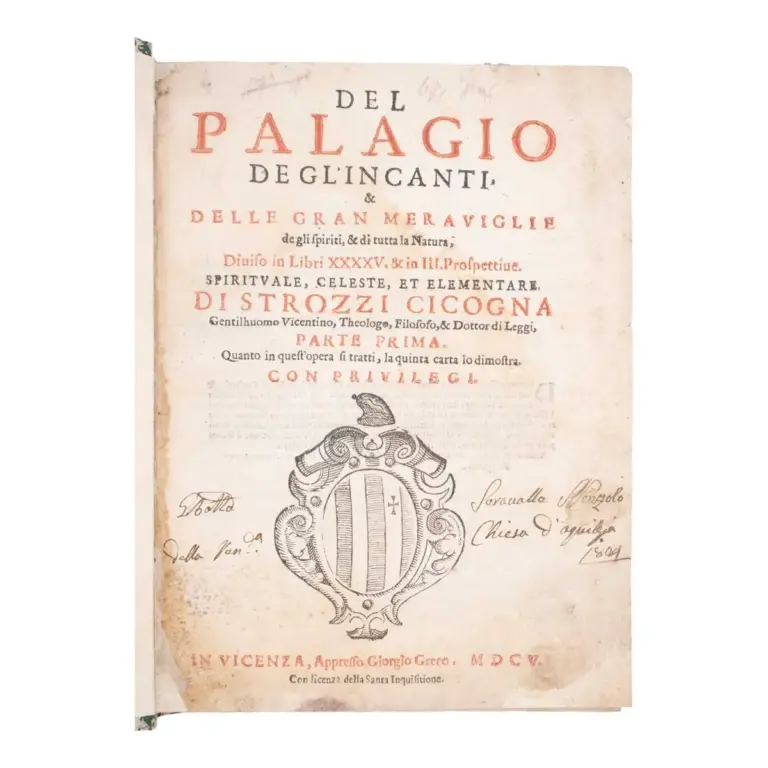
Del Palagio de gl’incanti, et delle gran Meraviglie de gli spiriti, et di tutta la Natura, diviso in Libri XXXXV…
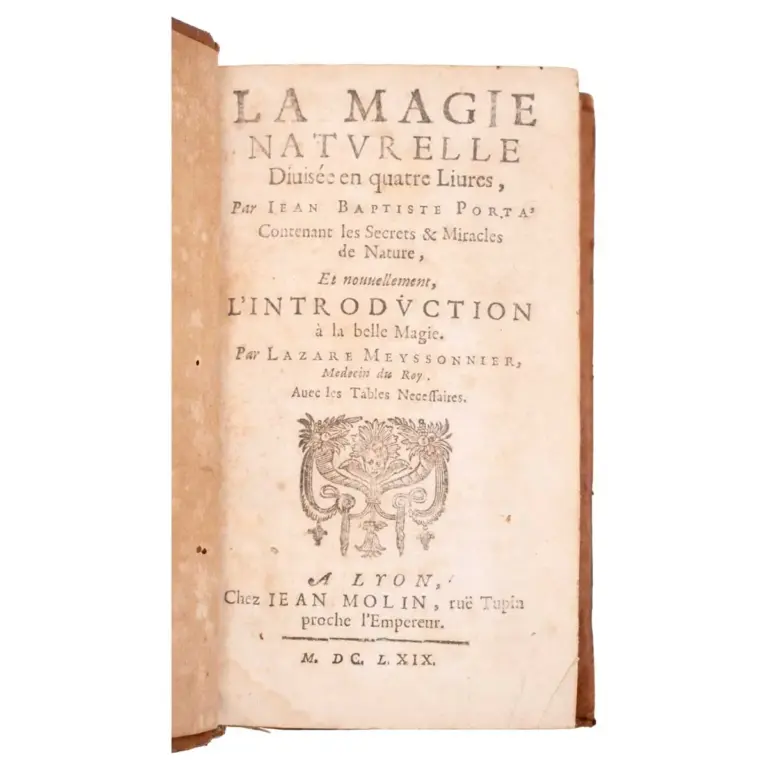
La Magie Naturelle Divisée en quatre Liures, Par Jean Baptiste Porta’ Contenant les Secrets & Miracles de Nature, Et nouvellement, L’Introduction à la belle Magie.