
 Marshall Rare Books
Flagellum daemonum. Exorcismos terribiles potentissimos, et efficaces... Mediolani: apud haer.
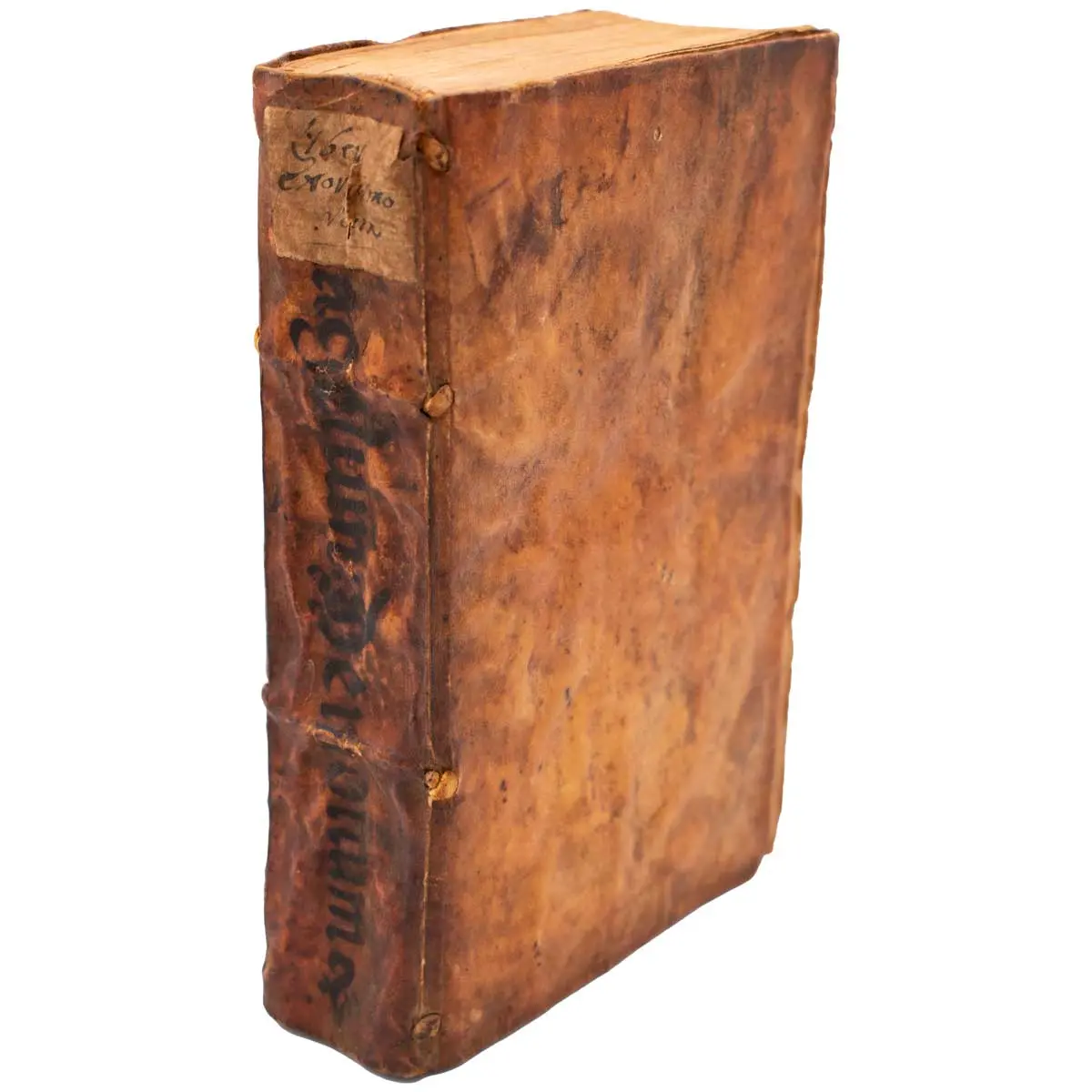
One of the most important and influential works on exorcism.
[16], 193 [i.e. 229], [3]pp., woodcut printers device to title, light marginal toning, contemporary burnished parchment, manuscript title to spine, 8vo (165x102mm), Pacifici Pontij, & Ioan. Baptistam Piccaleum, impressores archiep., 1624.
Girolamo Menghi’s best known work, later included in the authoritative collection on exorcisms the ‘Thesaurus exocrismorum.’ He prefaces the Flagellum with a vehement defence of exorcism. Dedicating the work to Cardinal Gabriele Paleotto, Menghi advocates a much more aggressive promotion and publication of books of exorcisms.
‘Flagellum Daemonum’ was translated into Italian and published in 1576, as ‘Compendio dell’arte essorcisica’ so it would reach the widest audience possible. This work was intended to instruct parish exorcists in the authorised rituals in order to combat the unorthodox practices employed by many exorcists in Italy. This practical approach was due partly to events of the recent past. A deadly infection had spread, threatening innumerable victims. Menghi argued that ‘medicina celeste’ as it was practised by ecclesiastical exorcists, was the only appropriate means to overcome diabolic power.
“Girolamo Menghi’s Flagellum Daemonum .. was a collection of seven rites of exorcism with detailed instructions on the preparation of the priest and the victim and what sorts of gestures or paraphernalia the priest should employ….He could use his book of exorcism, holy water, fire, or images of the devil…and there are rites of blessing given in this manual as well” Jane Davidson, ‘Early Modern Supernatural: The Dark Side of European Culture, 1400-1700.’
Both Flagellum Daemonum and Fustis Daemonum were published in one volume from 1598 and soon became popular all over Europe.
[BOUND WITH]
MENGHI, GIROLAMO
Fustis Daemonum Adiurationes.
220, [10]pp., woodcut printers device to title, light marginal toning, Mediaeval: apud haer. Pacific Pontij, & Ioan. Baptistam Piccaleum, archived printers, 1623.
One of the most important and influential works on exorcism by the most authoritative exorcist of Renaissance Italy, the Franciscan, Girolamo Menghi. A theologian and exorcist, he practised in Bologna, and was known as ‘the father of the exorcists’ art’. First published in 1584, Fustis Daemonum (The Daemon’s Bludgeon) followed the widely popular ‘Flagellum Daemonum’ published eight years earlier.
“The texts consist of both a theoretical treatise and a hands on guide describing actual exorcisms. Fustis daemonum lists exorcisms that follow a strict formula: after an initial prayer, signs of the cross are made, followed by incantations, a reading from the Gospels, and repeated orations” Joseph P. Laycock ‘Spirit Possession around the World: Possession, Communion, and Demon.’
Menghi was well acquainted with demoniacal literature; the authors he quotes range from Avicenna to Michael Psellus, from Lull to Sprenger. Despite his contemporary fame his works were placed on the index of forbidden books by the Sant’Uffizio in the C18th. “Girolamo Menghi articulated a philosophy of evil that reflected the social and religious culture of his time. …. He tried to arrange devils according to their function, spheres of action and bad habits – just as Pseudo-Dionysius the Areopagite had arranged angels in his ‘Celestial Hierarchy’”. Gaetano Paxia.