Marshall Rare Books
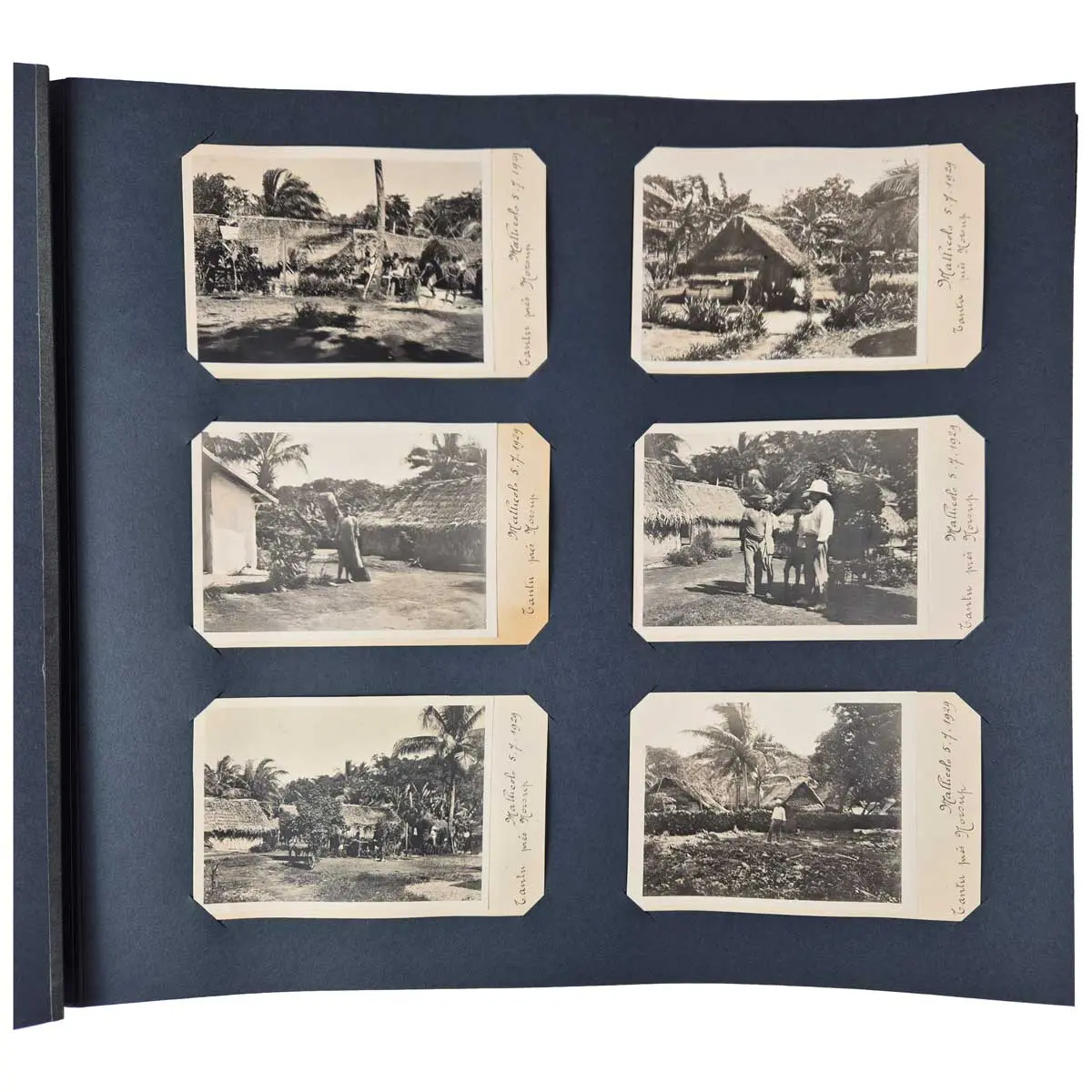
Historically Significant Collection of ca. 103 Gelatin Silver Photographs With Captions of 10 Different Islands in Vanuatu and 9 Gelatin Silver Photographs of Papua New Guinea, Taken by a French Planter Showing Copra, Cocoa, Coffee, Coconut And Cotton Plantations, Barques, Canoes And Ports Used For Transportation, Portraits Of The Locals in Traditional Dress And Communicating With Planters, The Vietnamese Settlers, Brought To Help Cultivate The Land, Local Architecture, As Well As Photos Of Important New Caledonian Entrepreneur Tiby Hagen And The Building Of His Headquarters On Epi Island. Ca. May-November of 1929.
RARE EARLY PHOTOGRAPHS OF INDIGENOUS PEOPLE OF VANUATU, PAPUA NEW GUINEA AND NEW CALEDONIA
103 gelatin silver photographs of 10 different islands in Vanuatu, 9 gelatin silver photographs of Papua New Guinea, all with contemporary ink captions in English of dates, places and other details, on mounts, preserved in an album, photographs sizes c. 120 x 90mm, c. May-November 1929.
A historically important collection of original photographs illustrating Vanuatu, or Les Nouvelles-Hébrides as it was called at the time by the French during the Golden Age of agricultural development of Archipelago. Since the early 1920s, significant efforts were made to transform Vanuatu into an agricultural powerhouse—a goal that was met with considerable success. However, this momentum came to a halt in 1931, when the global economic crisis severely impacted French colonies.
According to the captions, the compiler was a French farmer who likely worked by P.R.N.H. de Norsup (called at the time C.C.N.H.), one of the archipelago’s largest agricultural companies, and one of the few to survive the economic crisis of 1931. The house of the director of the company on Espiritu Santo Island was photographed and included in this album
The collection of over 100 photos that made up the Vanuatu portion of this collection document the diverse life of the french farmers, natives and labourers. At least 22 photos show the native people of Vanuatu in their settlements, in front of their dwellings with their children, as well as working, loading copra onto canoes and barques, carrying coconuts etc. The photographer spent 4 months in Vanuatu, all the photos are dated between May and August 1929.
The photos cover most of the large islands of the archipelago:
Mallicolo (34 photos, now known as Malakula), Espiritu Santo (19 photos), Téouma (9 photo), Epi (9 photos), Ambrym (8 photos), Maewo (7 photos), Vaté (6 photos, now known as Efate), Vanua Lava (6 photo), Pentecost (3 photos), and Kingdove (2 photos).
The photographer spent November in Papua New Guinea. The collection includes 9 from Rabaul. One photo shows the headquarters of Chinese Nationalist Party Kuo Ming Tang in Rabaul.
Tiby Hagen (1880-1947) owned several plantations and trading posts in New Caledonia, Vanuatu and the Solomon Islands. He is in at least 10 photographs, show Tiby with the locals, operating a canoe and being carried across a lake.
At least 12 photos show the Vietnamese labourers, their working conditions, receiving their salary and the Vietnamese village on the island Malakula. In 1919, the French Governor of the Pacific, Marie Casimir Joseph Guyon, responding to the demands of settlers and local trading houses, obtained from the General Government of Indochina the right to recruit Vietnamese workers locally, and the first official convoy bringing 145 Vietnamese arrived in Port Vila in 1921.
Overall, a historically important collection of photographs illustrating the life of Vanuatu at the peak of its economic development in the 1920s.
Books you may also like
Description des Indes Occidentales, qu’on appelle aujourdhuy le Nouveau Monde: Par Antoine de Herrera, Grand Chroniqueur des Indies, & Chroniqueur de Castille: Translatee d’Espagnol en Francois.
Excavations in Cranborne Chase, near Rushmore, on the borders of Dorset and Wiltshire.
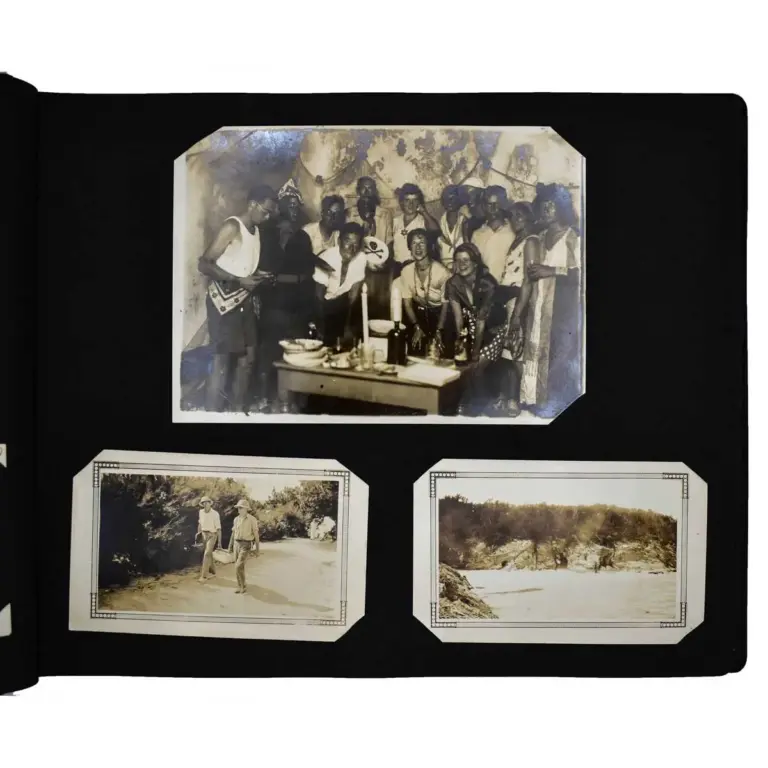
BATHYSPHERE, NONSUCH ISLAND – Photo Album 1930-1931