
 Marshall Rare Books
In Somnium Scipionis, Lib. II. Saturnaliorum, Lib. VII. Ex variis, ac vetustissimis codicibus recogniti, & aucti...
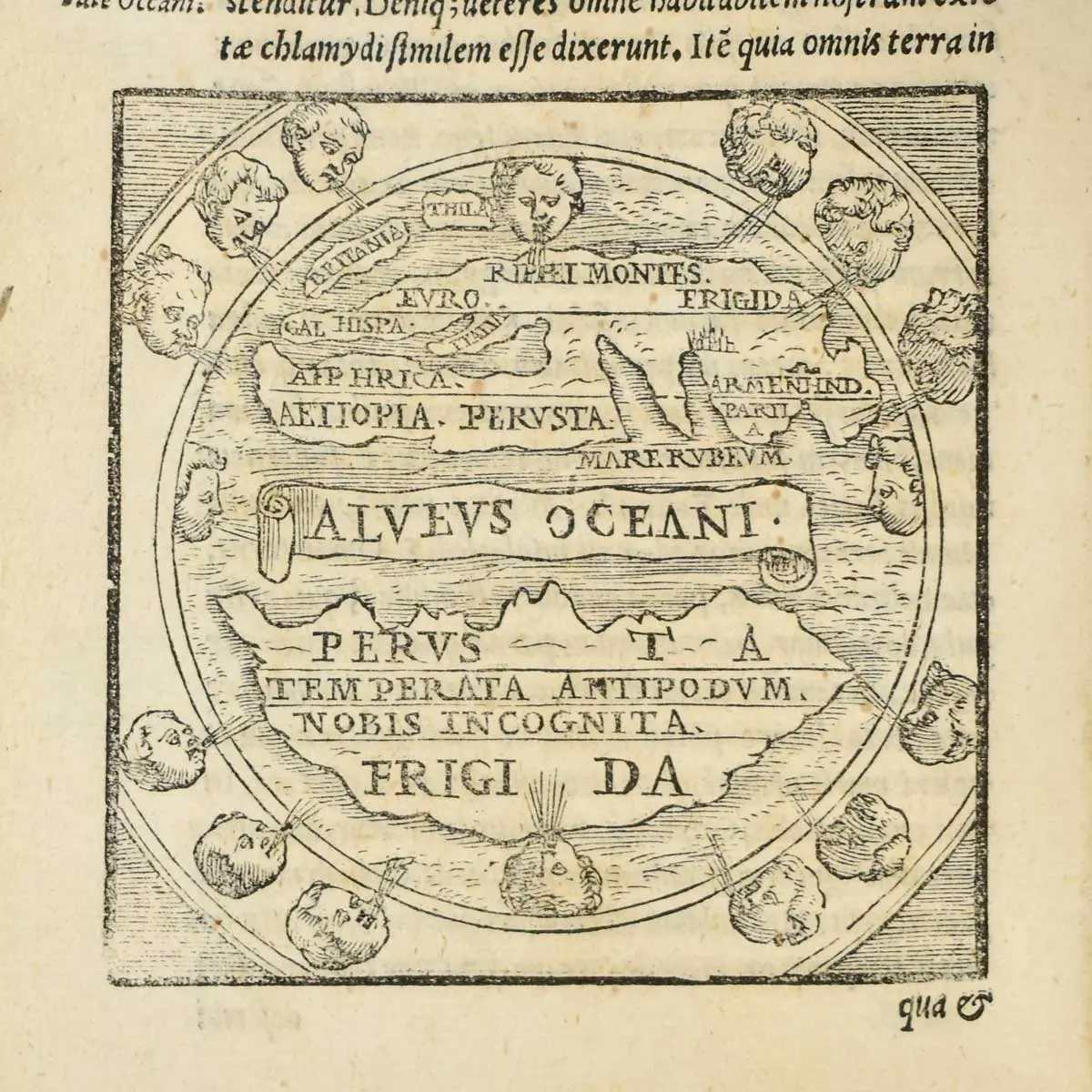
Venetiis: Ioan. Gryphius excudebat, 1565, 8vo, 145 x 96mm. pp. 567, [65], Woodcut diagrams in the text and a fine world map on p 144. Contemporary limp vellum, Manuscript title to spine and upper cover. A very attractive copy
Venetiis: Ioan. Gryphius excudebat, 1565, 8vo, 145 x 96mm. pp. 567, [65], Woodcut diagrams in the text and a fine world map on p 144. Contemporary limp vellum, Manuscript title to spine and upper cover. A very attractive copy
Written by Ambrosius Macrobius, this is a commentary on Cicero’s Dream of Scipio. It includes a rare woodcut map of the world, illustrating Cicero’s interesting theories. This diagrammatic map shows two distinct regions of the earth. The inhabited Afro-Eurasian continent was balanced by an unknown, and relatively equal, landmass (Temperata Antipodum Nobis Incognita) on the other side of an impassable torrid zone (Perusta) and a great boiling sea (Alveus Oceani). It was this notion of antipodean balance and landmass equivalence that continued to attract Renaissance minds to the geographical ideas of Macrobius.
Distinguished cartographers like Mercator and Ortelius would later incorporate Macrobius’ model into an immense southern continent (Australis Incongita) to balance the known lands of the world, and the division of the world into climactic zones is still in use today. According to King, this example of the ancient world is the 5th version, published by Sebastian Gryphius in Lyons.
What is most notable is that his ‘geographic concept … is different from that of Ptolemy’ (Shirley). The northern half of the world map shows Europe, Asia and India, with a truncated form of Africa, the Red Sea flowing into an equatorial ocean that separates the northern continent from a large southern continent bearing the inscription ‘Perusta tenperata, antipodum nobis incognita, frigida.’
Shirley Mapping the World 13. HC *10429; GW M19707; BMC V 417; Bod-inc M-004; BSB-Ink M-4; IGI 5927; ISTC im00012000; Goff M-12.