
 Marshall Rare Books
Kapa/Tapa Specimens late 18th and 19th Centuries mainly from the Sandwich Islands. Some From Captain Cook's Voyages
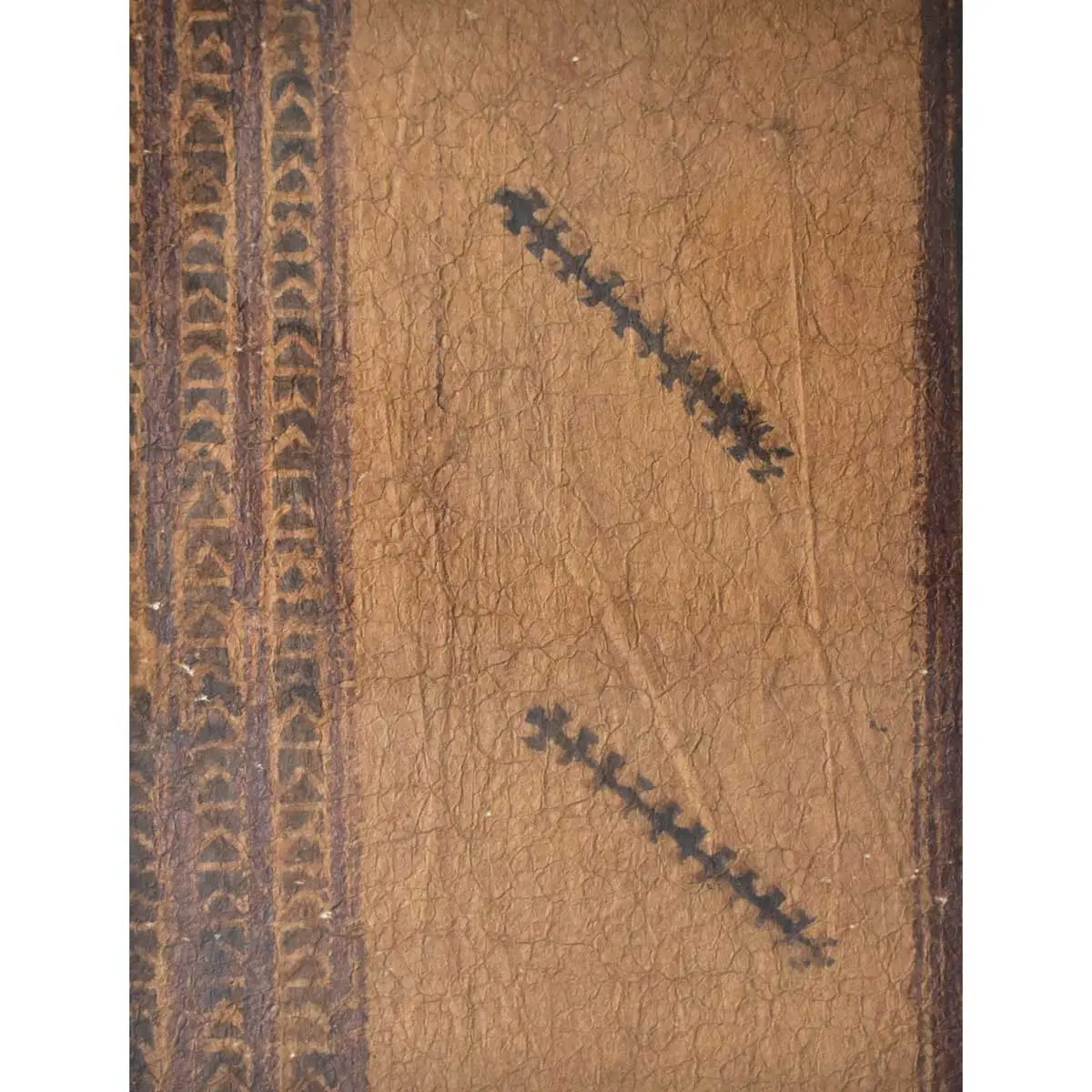
Oblong Folio, (32.5cm x 35cm), Half tan calf over marbled boards, red and green gilt morocco title-pieces, with a printed title page and 64 folders with 129 examples of kapa or tapa cloth, including 54 full-page and 45 mounted examples. Many of the samples have been brought back from Cook’s Voyages of the 18th century and subsequent voyages during the 19th century.
Oblong Folio, (32.5cm x 35cm), Half tan calf over marbled boards, red and green gilt morocco title-pieces, with a printed title page and 64 folders with 129 examples of kapa or tapa cloth, including 54 full-page and 45 mounted examples. Many of the samples have been brought back from Cook’s Voyages of the 18th century and subsequent voyages during the 19th century.
Of the Specimens at least Twenty Samples are identical or similar to the samples in Alexander Shaw. A Catalogue of the Different Specimens of Cloth Collected in the Three Voyages of Captain Cook to the Southern Hemisphere..(London 1787).
The fabric referred to as tapa – disseminated at the beginning of the 19th century by English, French and American whalers andis made from the bast, the internal part of the bark of certain trees. The bast is immersed in water then beaten for a long time with a small beater engraved in low relief in order to crush and release the fibre.
In the Hawaiian Islands, these fabrics called kapa, were used to make the three types of traditional clothing: the malo (loincloth), the pa’u (skirts worn by women) and the kihei (shawl) ( cf. Kooijman, 1988 : 24).
The samples brought together in this album testify to the extraordinary variety of kapa made in the Sandwich Islands since the 18th century.
Based on the essence of trees, in particular the Chinese Mulberry ( brussonetia papyrifera, wauke ), producing the most sought-after fabrics for their softness and clarity. Breadfruit ( artocarpus , uru ) and various local wild species, such as the darker pipturus (mamaki ) create a thickness of the fabric and show the imprints left by the beater, engraved with patterns of various designs and finesse.
The colours obtained by local plant pigments, i.e.browns, reds, yellows, greys, pinks and blues are used for backgrounds and patterns, creating the decorations made either during beating, by superimposing a virgin layer and a coloured layer or by inserting pigments after drying, by freehand or with a stencil.
This unique album features a wide, rare array of Hawaiian kapa samples. It demonstrates the richness and diversity of colours, patterns and techniques used.
See: Williams, Ryan and Howarth. ‘In Cook’s Wake Tapa Treasures from the Pacific’. 2018.