Marshall Rare Books
Pictures from the Tyng Collection
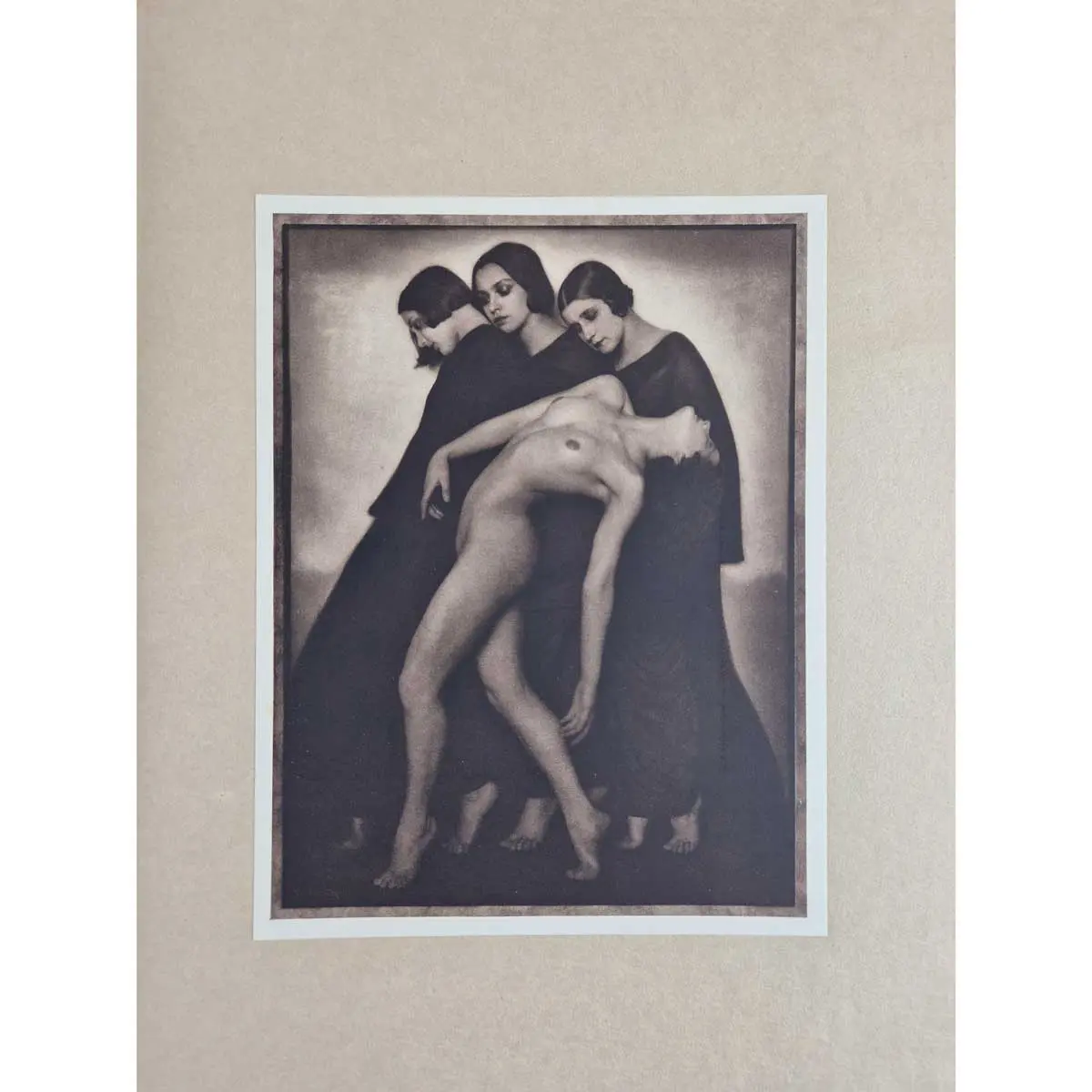
This portfolio was the first published by The Royal Photographic Society in June 1931. It was produced in honour of the Stephen H. Tyng Foundation and was available for purchase by The Society’s members.
London: The Royal Photographic Society, June 1931, portfolio of six photogravures tipped onto card , tissue-guards present, without the original loosely inserted printed information sheet, original printed brown card covers with duplicated smaller format photogravure (11.5 x 15cm) mounted to upper cover, tall folio.
This portfolio was the first published by The Royal Photographic Society in June 1931. It was produced in honour of the Stephen H. Tyng Foundation and was available for purchase by The Society’s members.
The first photogravure is Bewegungs Studie (Study of Movement) by Prof. Rudolf Koppitz (25.5 x 19cm), one of the most iconic and widely reproduced Austrian photographs of the early part of the twentieth century. The photograph’s sophisticated composition contains elements of Modernism, Pictorialism, and Surrealism, and also relates to the Viennese Secession and the Wienner Werkstätte movements in its stylized grace and perfection of craft. Taken in 1925, Bewegungsstudie became Koppitz’s most famous image during his lifetime and was frequently exhibited and reproduced.
Koppitz (1884-1936), who was actually of Czech origins but is more often credited as Austrian, originally created this masterful photograph in 1925. The nude dancer, credited to be the Russian Claudia Issatschenko, (but is more likely, her daughter, the ballet dancer and choreographer Tatyana Issatschenko Gsovsky b. 1901), is photographed with her head thrown dramatically back and flanked by three dark-robed women, portrayed by dancers from the Vienna State Opera.
Today, Koppitz’s work is appreciated but difficult to categorize. Elements of his life and creative development parallel that of his contemporaries. Like Edward Steichen, he served as an aerial combat photographer in World War I. With Heinrich Kühn he shared a belief in the beauty and redemptive value of nature. Like Pierre Dubreuil he achieved fame in his own day as a creator of entirely novel imagery that had no direct corollary in the photography of the time. He shared with these photographers a deep understanding of photographic craft and utilized a repertoire of techniques to execute his photographic ideas. Despite these resemblances, Koppitz’s work and his aesthetic are distinctly his own.
The other five photogravures in the collection are: St Malo by Arthur W. Burgess (20.5 x 25.5cm); A Russian Boy by Alexander Leventon (20.5 x 25.5cm); Mrs. Violet Gordon Woodhouse at the Harpsichord by Herbert Lambert (19 x 25.5cm); Groote Kerke Veere by John H. Anderson (19 x 25.5cm); and Muriel Evans by Arthur F. Kales (25.5 x 20.5cm).
Books you may also like
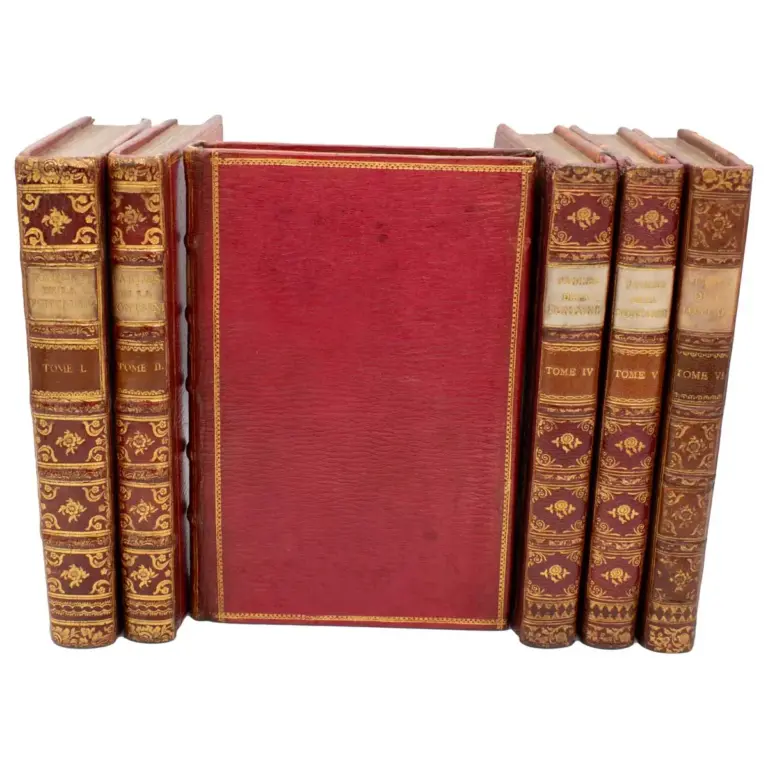
Fables choisies, mises en vers par J. La Fontain, nouvelle edition gravée en taille-douce, les figures par le sr. Fessard, le texte par le sr. Monular, dediées aux enfans de France
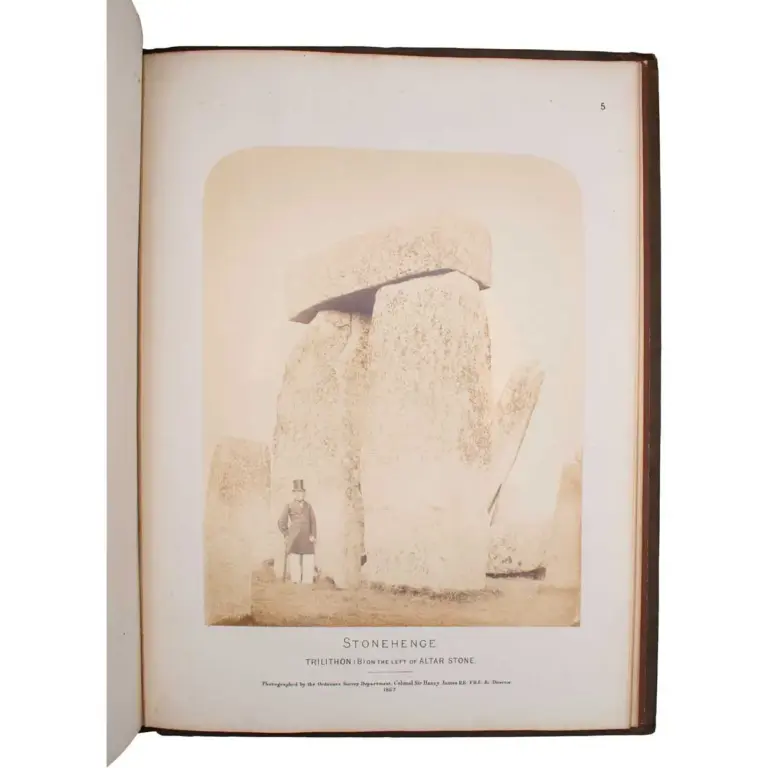
Plans and Photographs of Stonehenge, and of Turusachan in the Island of Lewis; with Notes relating to the Druids and Sketches of Cromlechs in Ireland.
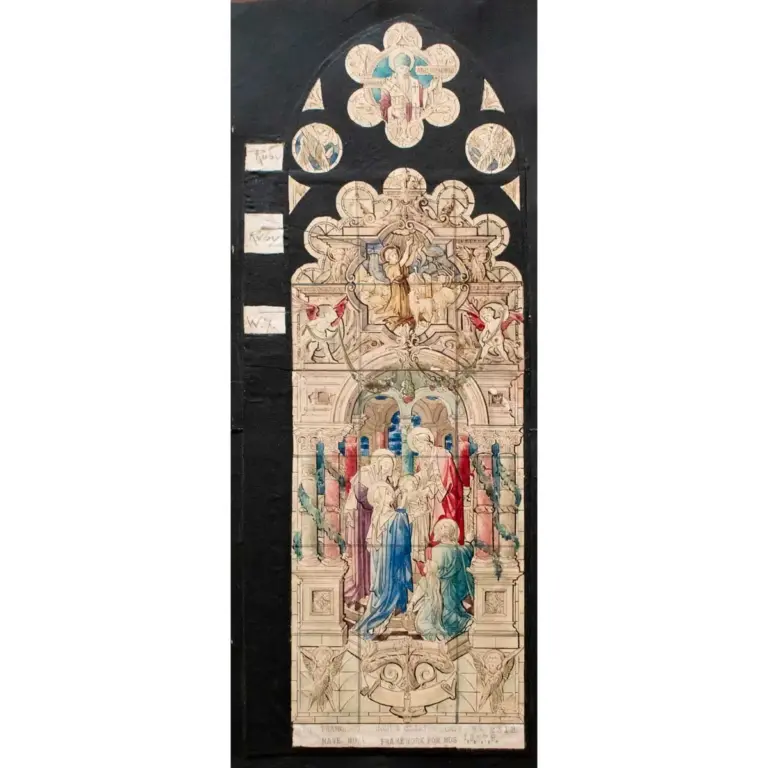
Two Watercolour Designs for Stained Glass Windows; one design for San Francisco Nave No.1, second design is likely for the Immaculate Conception Church Hawthorn in Melbourne, Australia.