Marshall Rare Books
Ptolemaic Armillary Sphere.
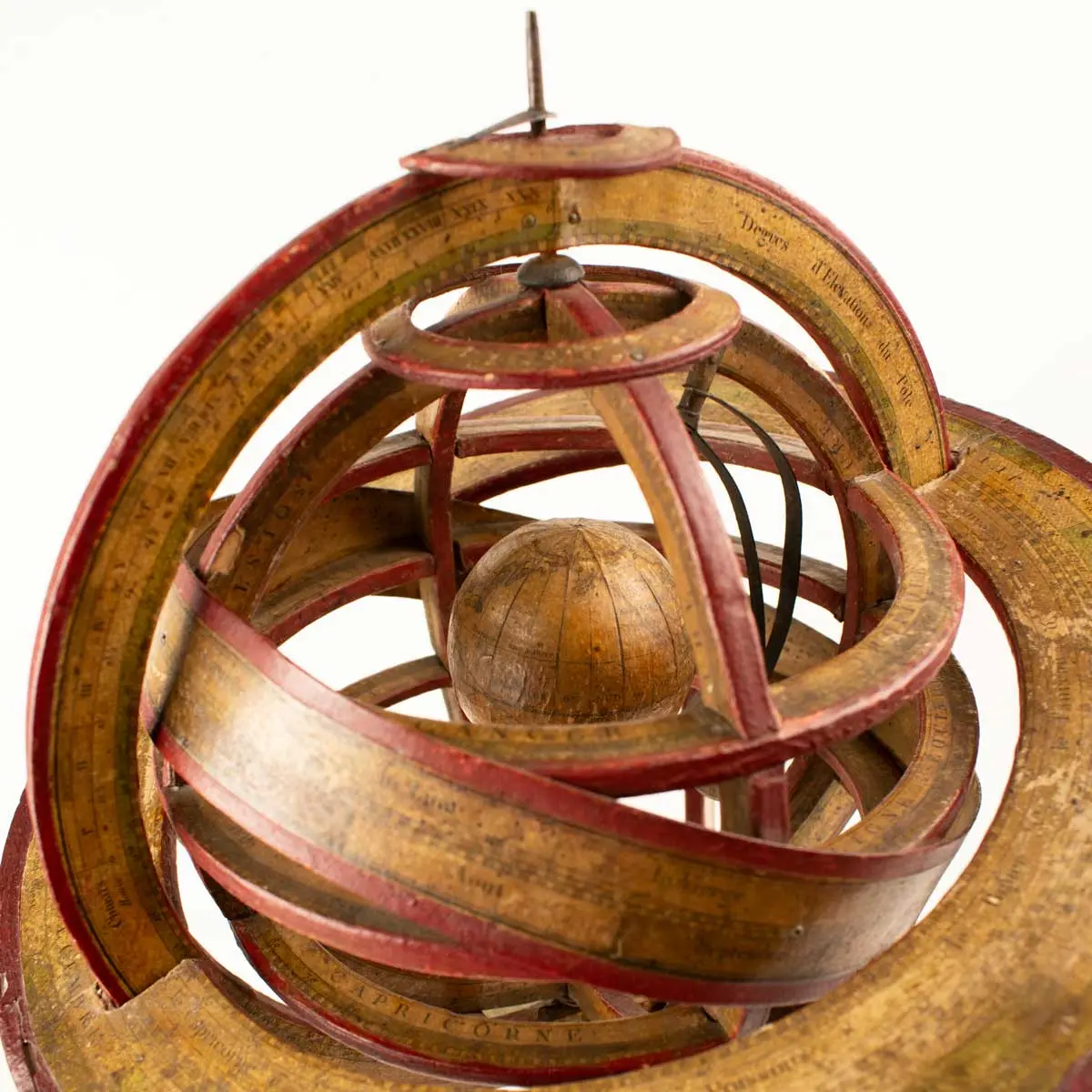
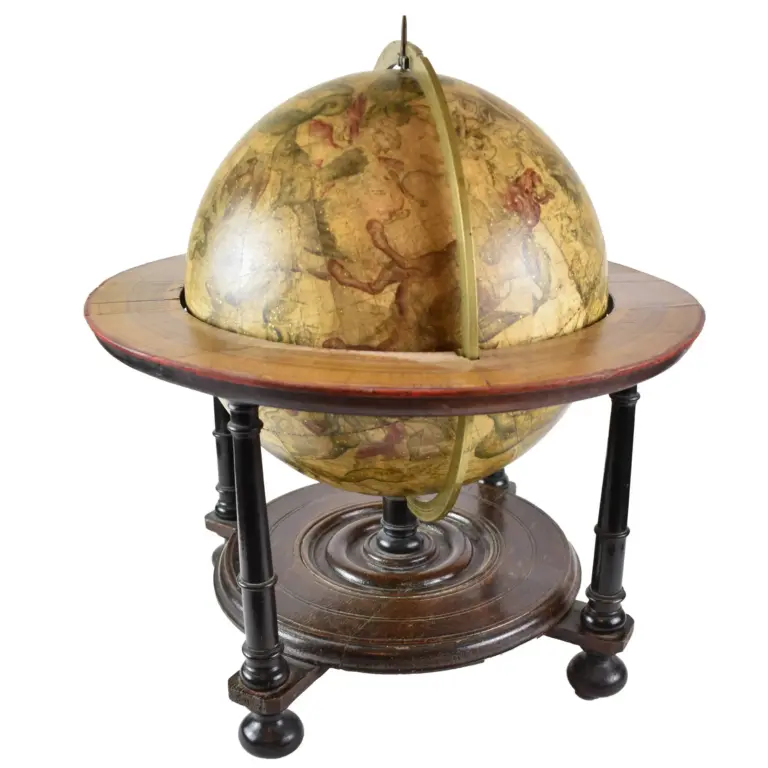
A very attractive late 18th century French Ptolemaic armillary sphere
[Paris: c.1790], The armillary structure: diameter 12 inches (305mm), mounted on an ebonised wooden stand with central column and turned wooden base. Overall height (460 mm).With a small 2 inch diameter terrestrial globe at the centre surrounded by sun and moon discs on metal quadrants and a series of pasteboard circles (the equator tropics and plane of the ecliptic), each with a green painted face, the reverse with an engraved papered surface, all joined by a equinoctial and solstitial colure and surrounded by a planar zodiac band.
A very attractive late 18th century French Ptolemaic armillary sphere (with the earth at the centre of the cosmos).
Charles-François Delamarche (1740-1817) founded his workshop around 1770 and, in a few years, he became the most famous French cartographer and globe maker between the 18th and 19th centuries. After having acquired the laboratory of the late Didier Robert de Vaugondy (1723-1786; himself a renowned cartographer who continued the family business founded by his grandfather Nicolas Sanson in the seventeenth century) and after having purchased, between 1788 and around 1800, the businesses of Jean-Baptiste Fortin (1750-1831) and Jean Lattré (around 1750-1800), he began to call himself “Successeur de MM. Sanson and Robert de Vaugondi, Géographes du Roi and de M. Fortin, Ingénieur-mécanicien du Roi pour les globes et les sphères.”
At the end of the eighteenth century, Delamarche possessed the warehouse stocks, as well as the manufacturing skills of the globes of his main rivals in Paris. In addition to this aggressive acquisition policy, the key to its success also lay in the combination of high-quality cartography combined with extremely attractive globes and armillary spheres; and of course, its famous red paint finishing touch. His workshop was located on Rue de Foin St Jacques “au Collège Me. (or “Mtre”) Gervais” in the Latin Quarter of Paris until around 1805, when he moved to rue du Jardinet No. 13. On the death of Charles-François in 1817, the reins of the company passed to his son Félix (1779-1835), who continued to publish, often in collaboration with the engraver Charles Dien, Sr. In 1835 the company first moved to rue du Jardinet No. 12 and a little later to rue du Battoir No. 7
Dekker, Elly, et al. Globes at Greenwich: A Catalogue of the Globes and Armillary Spheres in the National Maritime Museum, Greenwich. London: Oxford University Press and the National Maritime Museum, 1999. p. 321.
Van der Krogt P, Old lobes in the Netherlands,1984, 98-99.
Books you may also like
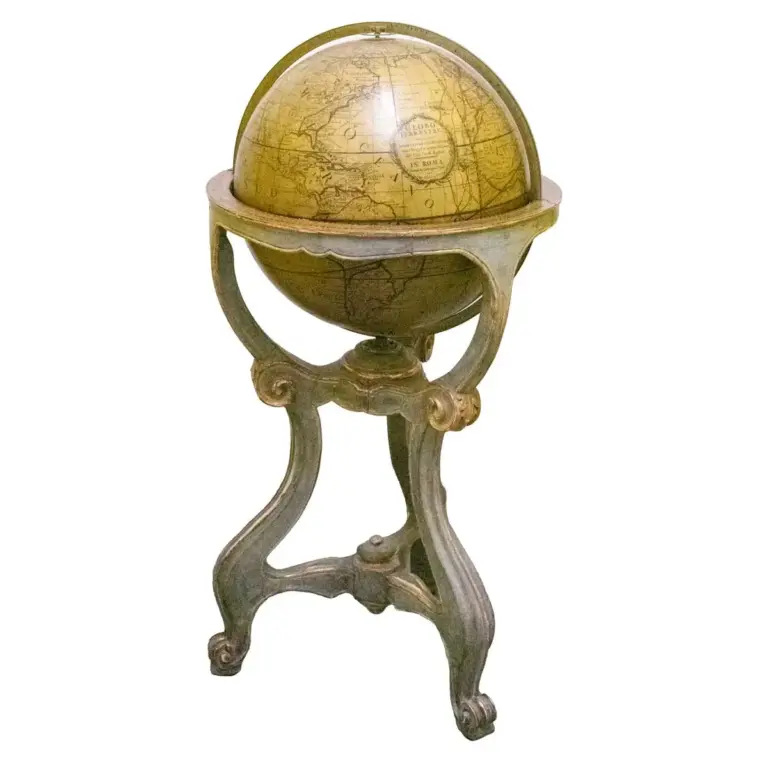
A Large Terrestrial Globe. Titled ‘ Globo terrestre delineato sulle ultime osservazioni con i viaggi e nuove scoperte del Cap. Cook inglese’.
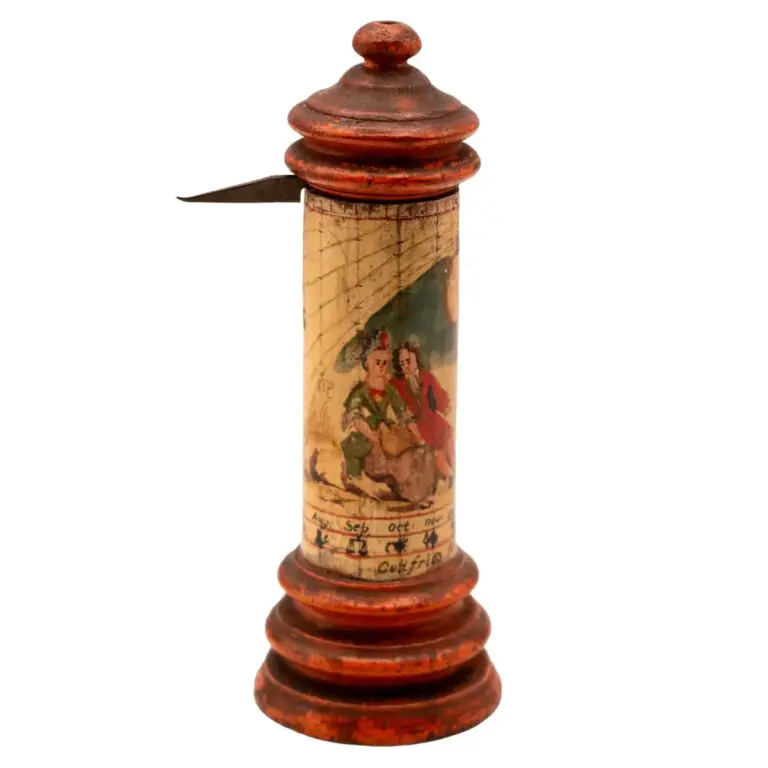
Painted Wood Pillar Dial
Uranographia / caelum omne hic Complectens / Illa pro ut aucta / et ad annum 1700 Completum / MAGNO ab HEVELIO / correcta est / its