
 Marshall Rare Books
Sphaera Mundi compendium foeliceter inchoat. with Regiomontanus Disputationes and Puerbach Theoricae novae planetarum.
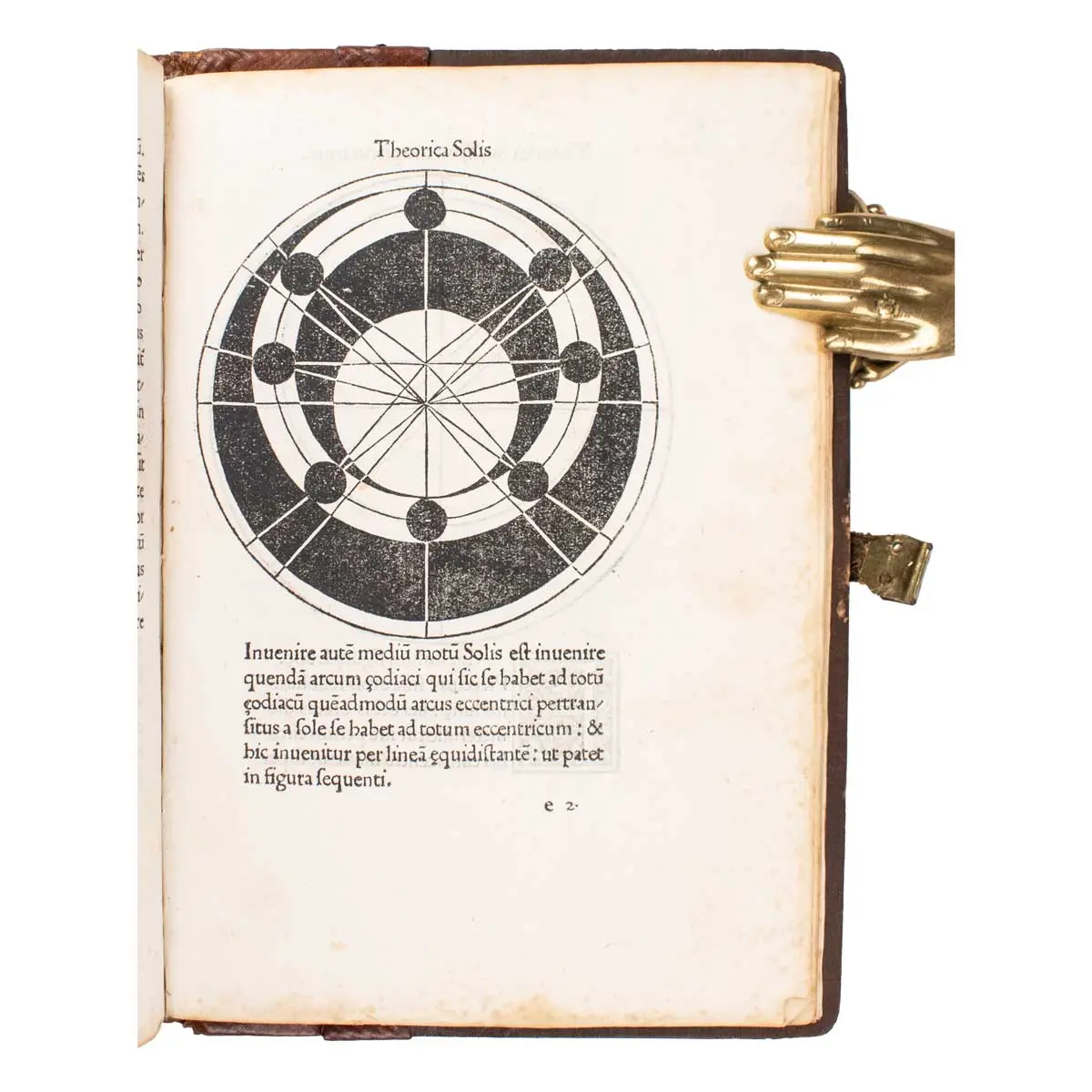
THE FIRST ILLUSTRATED EDITION OF THE MOST INFLUENTIAL PRE-COPERNICAN TEXT ON ASTRONOMY
Venice: Franciscus Renner De Heilbron, 1478, 4to (207 x 133mm.), 48 leaves, 25 lines, Roman and Gothic letter, headings on a1 recto and e1 recto printed in red, 11 woodcut diagrams in text, 15 5-line white-on-black woodcut initials, 18th century diced calf over old (upper) and later (lower) bevelled wooden boards, one brass clasp. An attractive copy of a rare work.
Sacrobosco’s De sphaera mundi (editio princeps 1472) was the first printed astronomical book, and a fundamental text of medieval and post-medieval astronomy. It is a synthesis of Ptolemy and his Arabic commentators, presenting an elegant, accessible Ptolemaic cosmology, and for this reason was adopted as the most authoritative astronomical textbook of its time. From the time of its composition, ca 1220, Sacrobosco’s De sphaera ‘enjoyed great renown, and from the middle of the thirteenth century it was taught in all the schools of Europe. In the sixteenth century it gained the attention of mathematicians, including Clavius. As late as the seventeenth century it was used as a basic astronomy text… ‘ (John F. Daly in DSB). It was the most frequently printed astronomical work, some 30 incunable editions alone being published, and an even greater number of sixteenth-century editions.
The Sphaera mundi was first printed, without illustrations, in 1472 at Ferrara, of which only a single copy survives. The earlier, unillustrated editions left spaces for diagrams to be added by hand. The present edition is one of three printed by Renner in 1478 using the materials of Erhard Ratdolt, Pomponius Mela, De situ orbis, for another), and the diagrams here may be from the same hand as the diagrams in Ratdolt’s 1476 editions of the Calendar of Regiomontanus (Goff R93 and R103). Another edition of these two texts, printed by Adam de Rottweil at Venice on 10 September 1478, is a reprint of the 1472 editio princeps with what are apparently crude copies of Renner’s woodcuts.
It was quite generally adopted as the fundamental astronomy text, for often it was so clear that it needed little or no explanation. It was first used at the University of Paris. This is one of the earliest works to define a sphere, explain its divisions, including the four elements, and also comment on the heavens and their movements. The revolutions of the heavens are from east to west and their shape is spherical. The earth is a sphere, acting as the middle (or centre) of the firmament; it is a mere point in relation to the total firmament and is immobile. Its measurements are also included. It treats the various circles and their names- the celestial circle, the equinoctial, the movement of the ‘primum mobile’ with its two parts, the north and south poles, the zodiac, the ecliptic, the colures, the meridian and the horizon, and the Arctic and Antarctic circles. It closes with an explanation of the five zones. Then it explains the cosmic, chronic, and heliacal risings and settings of the signs and also their right and oblique ascensions. Explanations are furnished for the variations in the length of days in different global zones namely the equator, and in zones extending from the equator to the two poles. A discussion of the seven climes ends the chapter. The movement of the sun and other planets and the causes of lunar and solar eclipses form the last section.” (Dictionary of Scientific Biography).
Provenance:
John Charrington, The Grange, Shenley, Kelmscott Press bookplate; “Bought of J.Wm. Brown, Edinburgh, Oct. 1913”, inscription; Lurley Manor, bookplate; Fort Hill, bookplate; Hamill & Barker (Chicago booksellers), 16 January 1961, inscription THE WARDINGTON LIBRARY: ATLASES, PART II–10/10/2006
Reference:HC *14108; Goff J402; BMC v 195; Klebs 874.6; Essling 257; Sander 6659
Books you may also like
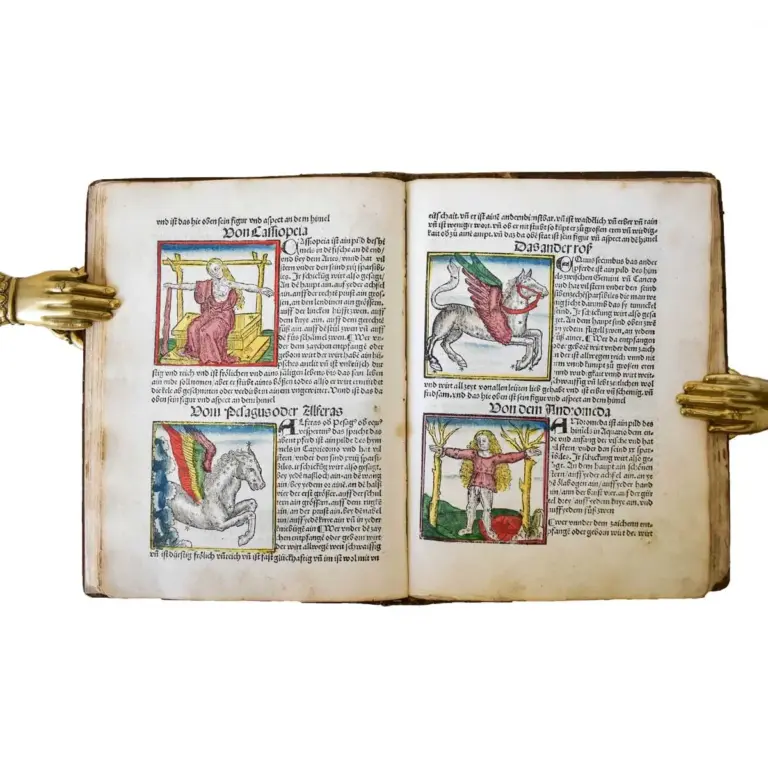
Kalendarius Teütsch.
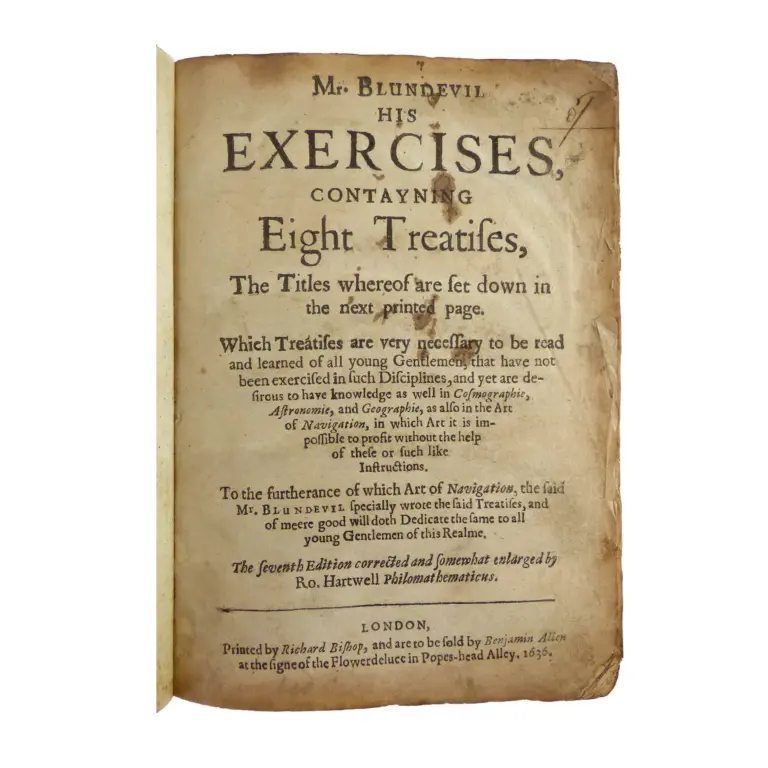
Mr. Blundevil his exercises contayning eight treatises,
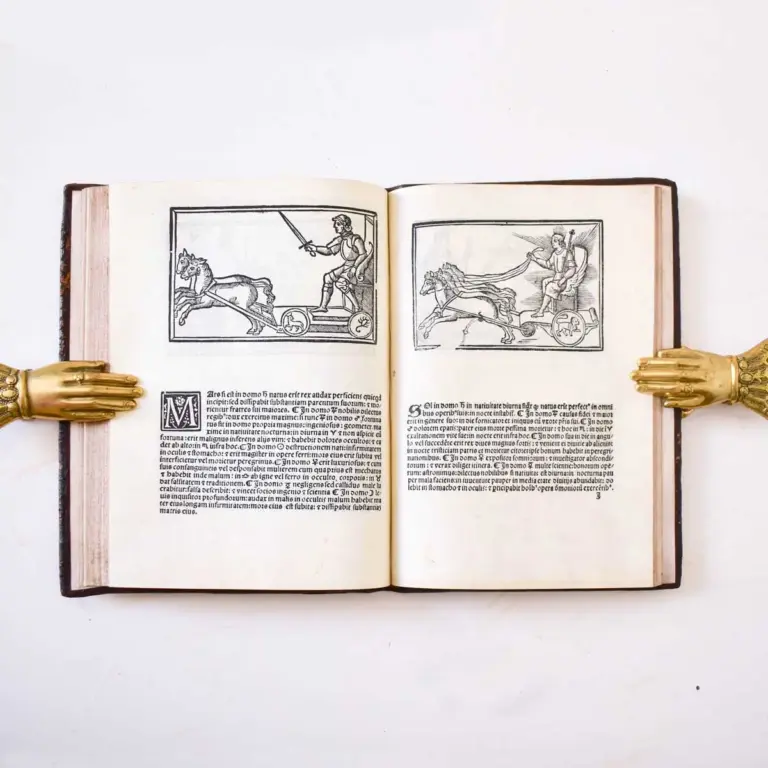
Compilatio Leupoldi ducatus austrie de astrorum scientia Decem continentis tractatus.
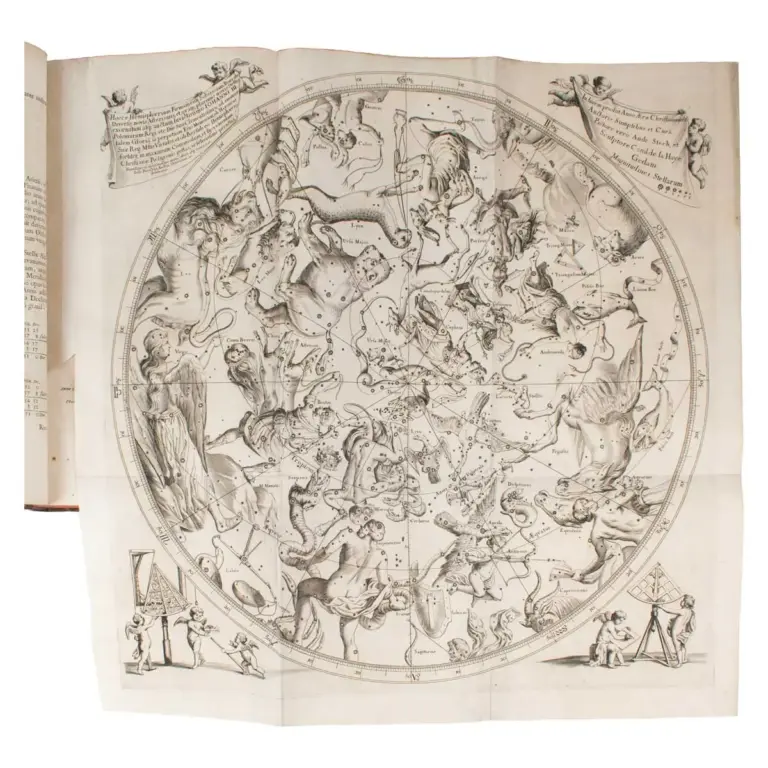
Prodromus Astronomiae, exhibens fundamenta, quae tam ad novum plane & correctiorem stellarum fixarum catalogum construendum.
![Sextus decretalium liber… in concilio Lugdunesi editus [and:] Clementis quinti constitutions in concilio vienensi edite… [and:] Extravagantes viginti Joannis vigesimisecundi…](https://marshallrarebooks.com/wp-content/uploads/2026/04/Papal-Bull-1-768x768.webp)