
 Marshall Rare Books
The Art of Bookbinding,
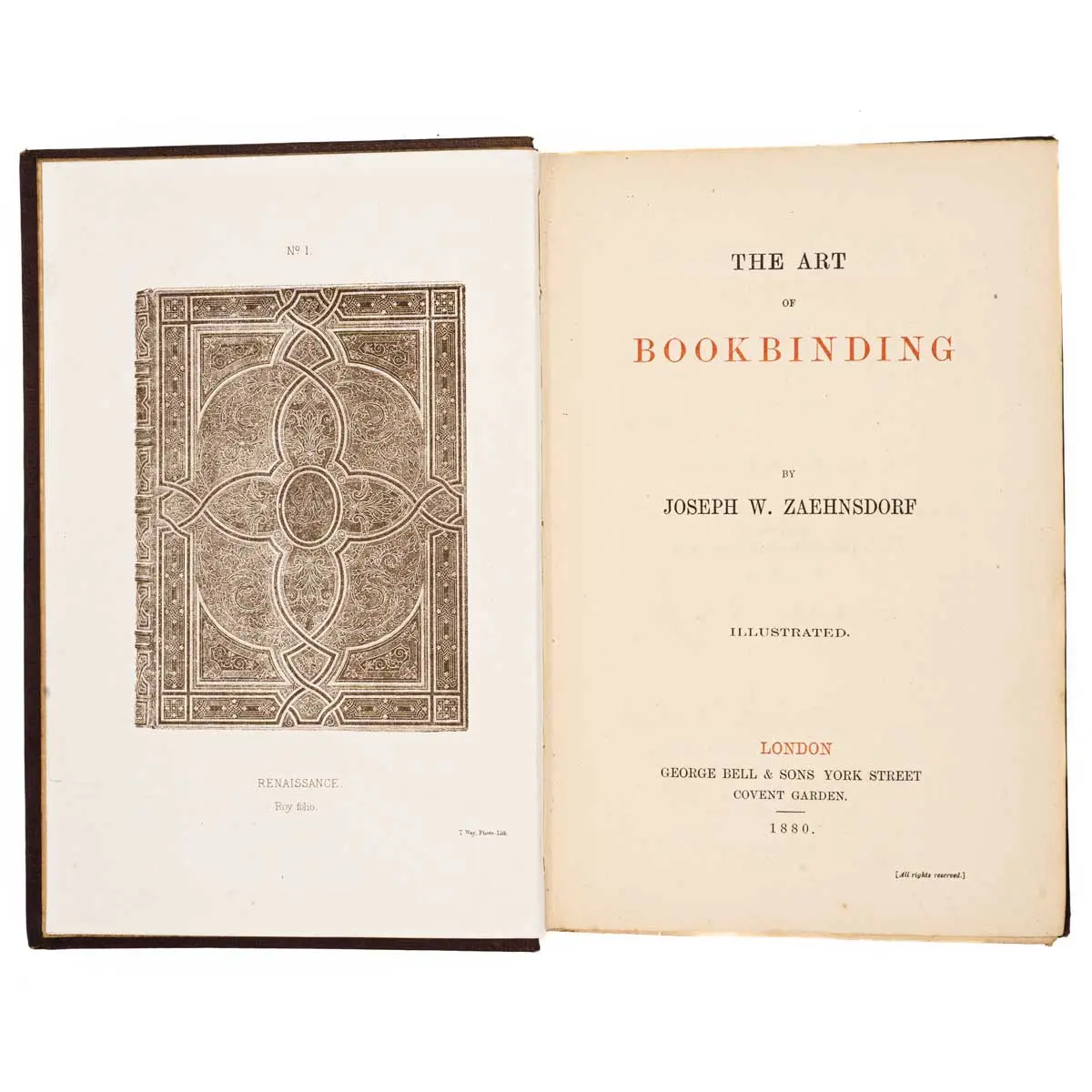
The first edition of Zaehnsdorf’s classic manual on binding technique.
PRESENTATION COPY, presentation note to flyleaf, title in red and black, photolithographic frontispiece, 9 photolithograph plates, text illustrations, publishers maroon cloth, 8vo, London, George Bell, 1880 .
The first edition of Zaehnsdorf’s classic manual on binding technique. It contains a text illustration of the Smyth sewing machine from the 1950s. This, and the folding machine of the same time, are probably the single most-cutting innovation of the period. They were responsible for a radical re-ordering of working practices in the bindery. “Few binders work their own headbands in these times of competition and strikes for higher wages. It takes some time and pain to teach a female hand the perfection of headband working … owing to this, most bookbinders use the machine-made headband.”
Zaehnsdorf, although often sceptical about the advantages of machinery, was awed by the new machine: “…about 20,000 sheets may be sewn in a day.” Hand sewing was not made obsolete, however, as the Smythe was used primarily on cheap cloth work. Finer books were hand-sewn by women well into the next century.
Originally written for the growing band of late-Victorian amateur bookbinders this text enjoyed a considerable sale among professional trade binders, so much so that their needs were recognised in the second edition of 1890, which contained additional material on trade practices.