Marshall Rare Books
The Narrative of Robert Adams, A sailor, who was Wrecked on the Western Coast of Africa, in the Year 1810, was Detained Three Years in Slavery by the Arabs of the Great Desert, and resided Several Months in the City of Tombuctoo
Controversial Account of Timbuktu
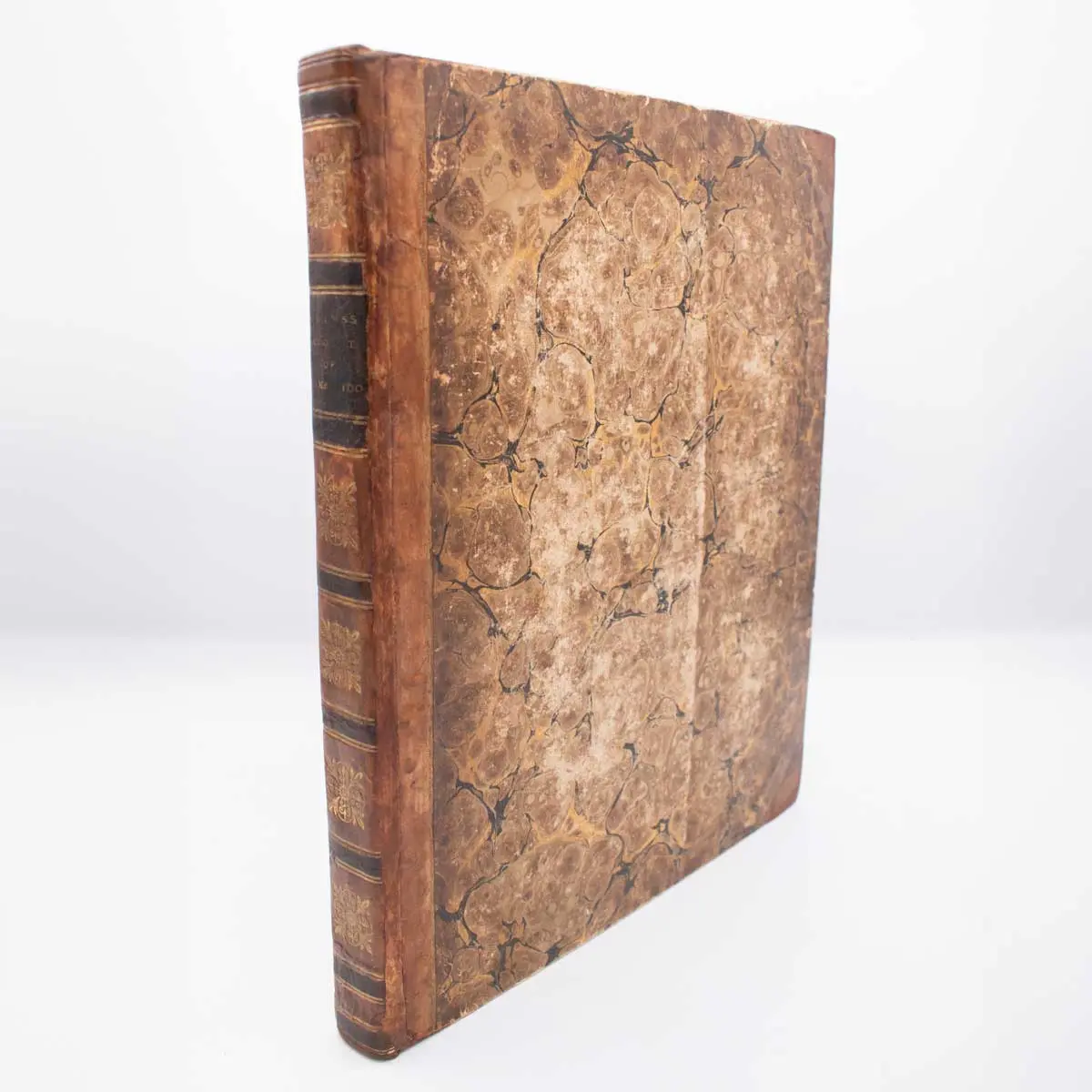
FIRST EDITION, xxxix, 231pp, copper engraved folding map, tear along fold line, light foxing throughout, half calf over marbled boards, spine gilt, corners and hinges repaired, 4to, London, John Murray, 1816
Robert Adams, real name Benjamin Rose, was taken prisoner after his ship was blown off course and wrecked on the West Coast of Africa, where the crew were enslaved by Arabs and both the Captain and Mate were killed. He was fortunate to survive his experiences as a slave, but after three years the British consul at Mogador, Joseph Dupuis, managed (via an agent) to buy back Rose from his then owners and sent him on to the American consul-general at Tangier. Supposed to have travelled back to America from Cadiz, Rose somehow contrived to miss the boat and took a British vessel bound for Liverpool instead. He eventually was found begging on the streets of London by Simon Cock, secretary to the committee of the Company of Merchants Trading to Africa. Cock was eventually convinced of the veracity of his tale and arranged for its publication.
This book was the first to describe Timbuktu as a dull squalid place, boasting none of the glories of old, creating controversy around the validity of his account. Prior to its 1816 publication, Adam’s account was verified by both Banks and Barrow and some members of parliament with a vested interest in Africa. There is also a suggestion that Cock, a former agent for slave traders, was using this book to revive his own reputation and that of his African Company.
The Narrative was the inspiration for Anglo-Afghan author Tahir Shah’s novel Timbuctoo (2012).
[Howgego II, R24]