Marshall Rare Books
The Tryals of Joseph Dawson, Edward Forseith, William May, William Bishop, James Lewis, and John Sparkes. For Several Piracies and Robberies by them committed, in the company of EVERY the Grand Pirate, near the Coasts of the East-Indies; and several other places on the seas, Giving an account of their Villianous Roberies and Barvarities. At the Admiralty Sessions, begun at the Old Baily on the 29th of October, 1696. And ended on the 6th of November.
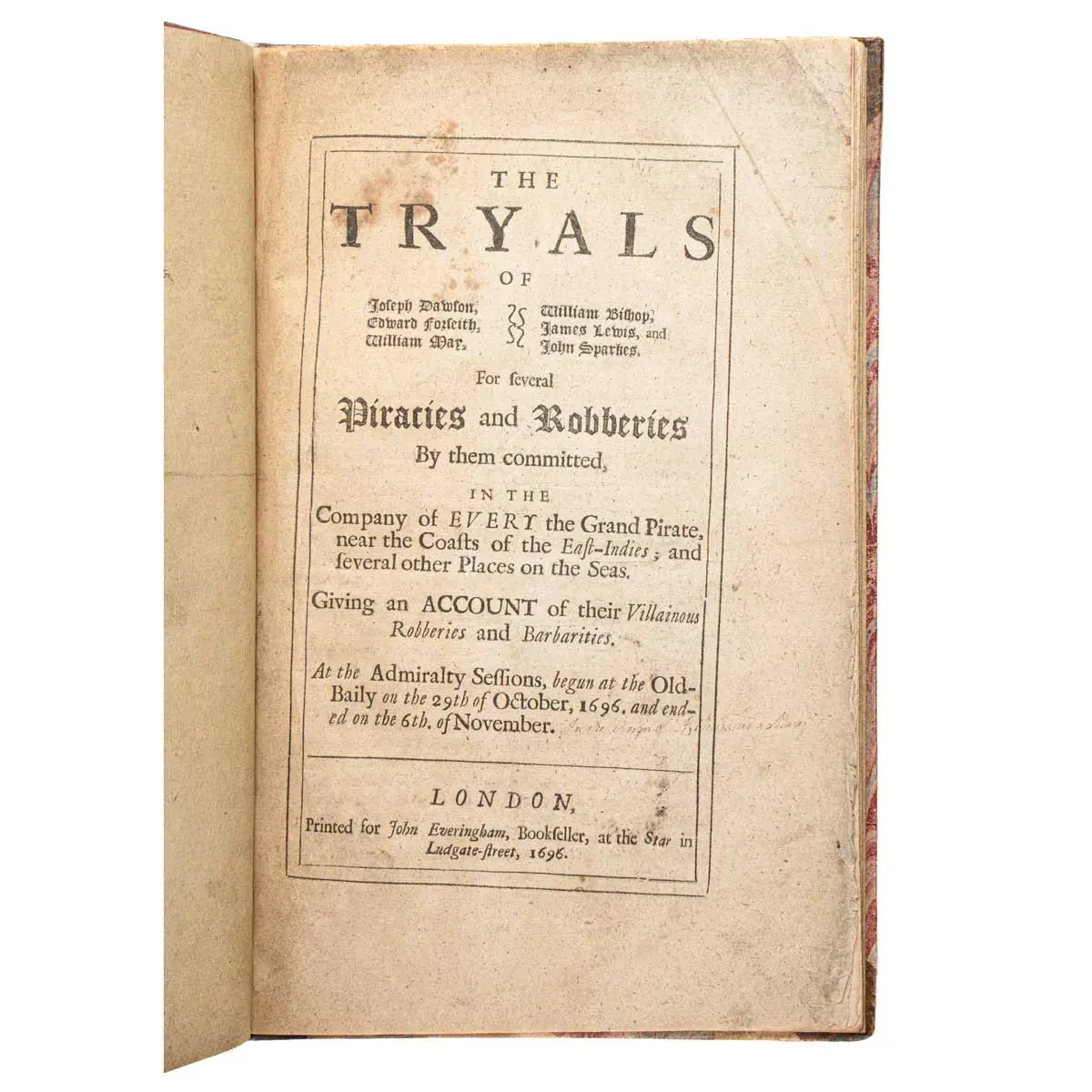
A scarce printing of the trial of the only members of Avery’s men to be brought to justice.
FIRST EDITION, 28pp, quarter calf over marbled boards, folio, London, for John Everyingham, 1696.
A scarce printing of the trial of the only members of Avery’s men to be brought to justice.
Henry Avery, also known as Henry Every, Long Ben, the Arch Pirate and King of the Pirates was Britain’s most renowned pirate during the Golden Age of Piracy. An experienced seaman, Avery had served in the Royal Navy, on merchant ships, slave ships and as a buccaneer, before beginning a life of piracy in 1691. Leading a bloodless mutiny against privateer Captain Gibson of the Charles II, Avery sailed the ship – now named the Fancy – for the Indian Ocean. In 1695, after preying on various ships en route around Africa, the Fancy was joined by other pirate ships, and under Avery’s command, the small fleet sailed to the mouth of the Red Sea. Luck would have it that the 25-ship Grand Mughal fleet was returning through the Red Sea after its annual pilgrimage to Mecca, laden with royal pilgrims, jewels and gold. The 5 pirate ships captured the Grand Mughals treasure ship, seizing £600,000 worth of loot – equivalent to around £97.1 million today.
Due to the democratic governance instilled on pirate vessels, the principals received over £1000 each, depending on their contribution, with a minimum payable of £110 for apprentices. One of these apprentices had his wages stolen by the accused John Sparkes. He got his revenge by testifying against him during this trial.
Avery and his fleet sailed on, arriving at the Bahamas where his ships were driven ashore by a storm. The Governor of New Providence allowed them to land in exchange for an enormous bribe. However, the furious Mughal emperor Aurengzeb accused Britain of complicity in the raid and threatened to expel the East India Company from India. The British government, seeking to appease the emperor, launched the first international manhunt, declaring Avery “an enemy of all mankind”.
Tipped off about a proclamation newly arrived from England, placing a £500 bounty on Avery’s head, the party fled. Many went to America, some stayed within the West Indies, and some to Ireland. A few attempted to return to England and of these some were captured. The main witness for the Crown was pardoned and able to set himself up as a banker. While six of his fellow pirates did hang, the pirate booty was never recovered, nor was Henry Avery ever brought to justice. According to Johnson, but entirely uncorroborated, Avery returned to England but died a pauper in Barnstaple after frittering away his wealth.
The success of his ventures is thought to have inspired an era of piratical activity catalogued by Johnson in 1724/6, and was the model for Daniel Defoe’s hero in Life, Adventures, and Pyracies. Of the Famous Captain Singleton (1720).
The seizure of the Moghul’s bounty strained diplomatic relations to the extreme and the government required scapegoats. These six unfortunates were the only member of his crew (thought to number over one hundred men) to be tried. The eight men named were captured, but two were pardoned for testifying against their crewmates, and another had his sentence commuted. The initial trial resulted in acquittal, but the Crown hastily convened a second on different charges. Sparkes was the only member of the condemned to admit guilt.
[Wing, T2252, Gosse, p.68-69.]
Books you may also like
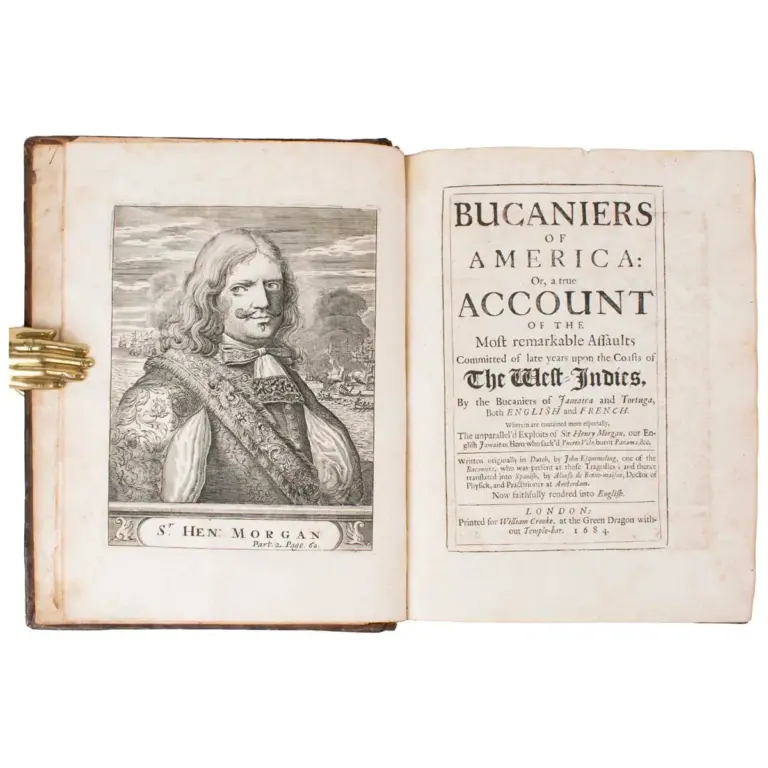
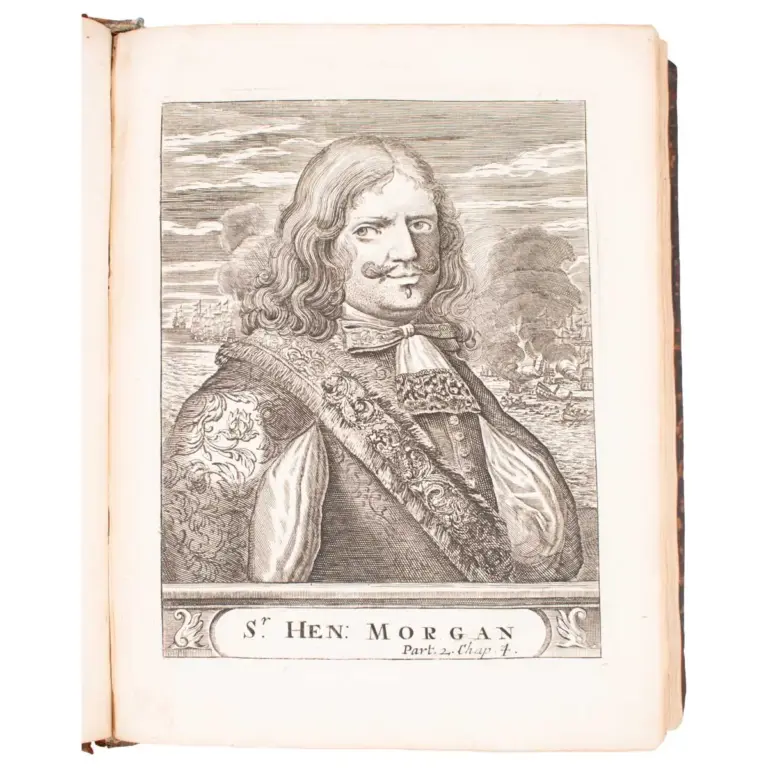
Bucaniers of America: Or, a true Account of the Most Remarkable Assaults Committed of Late Years Upon the Coasts of The West Indies, by the Bucaniers of Jamaica and Tortuga, Both English and French…