
 Marshall Rare Books
TRILOBITE
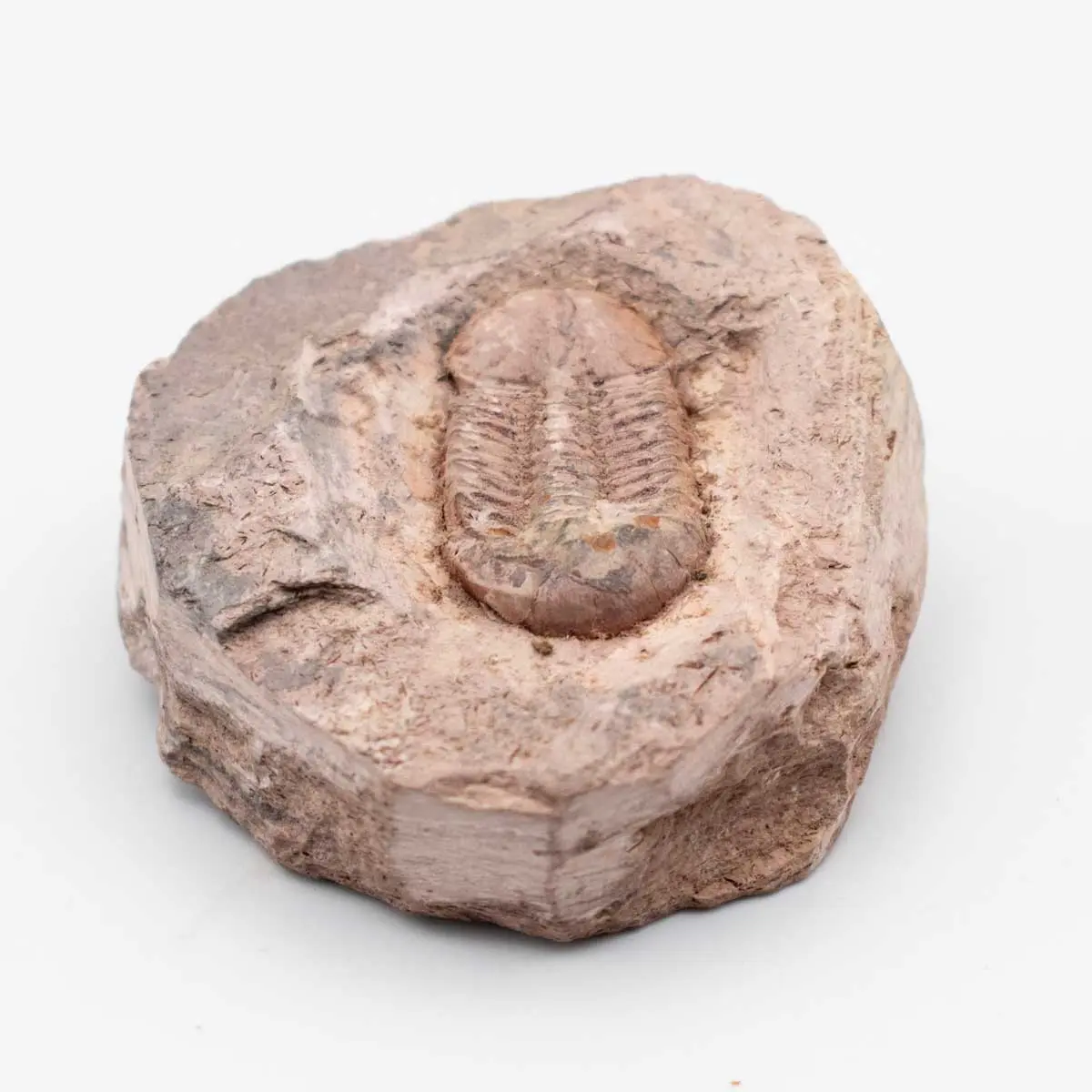
A well preserved example of a British Trilobite, excellent detail throughout, spines completely free of surrounding rock, 50x55mm, Lyme Regis, United Kingdom, Devonian (410 million years ago)
One of the earliest groups of arthropods to appear in the fossil record, trilobites were among the most successful of all early animals, existing in oceans for almost 270 million years, with over 22,000 species having been described. Because trilobites had wide diversity and an easily fossilised mineralised exoskeleton made of calcite, they left an extensive fossil record. The study of their fossils has facilitated important contributions to biostratigraphy, paleontology, evolutionary biology, and plate tectonics.
Trilobites saw great diversification over time. For such a long-lasting group of animals, it is no surprise that trilobite evolutionary history is marked by a number of extinction events where some groups perished, and surviving groups diversified to fill ecological niches with comparable or unique adaptations. Generally, trilobites maintained high diversity levels throughout the Cambrian and Ordovician periods before entering a drawn-out decline in the Devonian, culminating in the final extinction of the last few survivors at the end of the Permian period.