Marshall Rare Books
Twelve Fine Chinese Watercolours of Exotic Birds of Paradise in very Fine Gilt Frames.
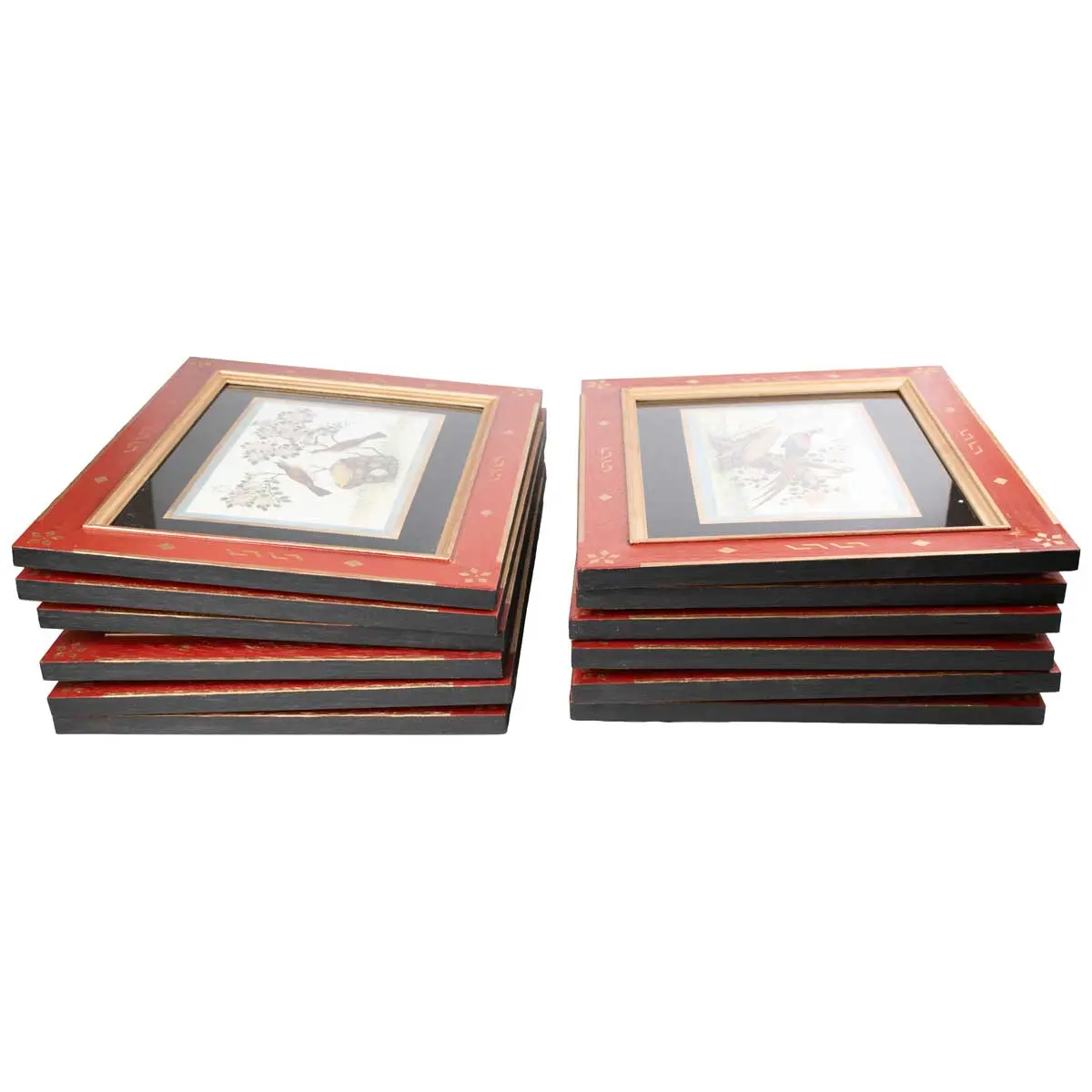
12 very fine brightly coloured watercolours of exotic birds from the Tingqua workshop in attractive gilt frames.
12 very fine brightly coloured watercolours of exotic birds from the Tingqua workshop in attractive gilt frames. Folio Sheets on Pith Paper (380 x 240mm) Framed. [c.1840].
Tingqua ( fl 1830-70), along with Sunqua is considered one of the outstanding Chinese Artists developing brilliantly coloured watercolours during early 19th century China.
Tingqua’s studio at 16 China Street, Guangzhou, was perhaps the most prolific source of Chinese export paintings of its time. Working in a manner influenced by Western artistic traditions, Tingqua and the painters of his studio restricted themselves to gouache and watercolours, perhaps to avoid rivalry with Lamqua’s (his brother) oil paintings. Their pictures, which were often sold in sets, represent manufacturing processes (of tea, cotton etc.), deities, ceremonies, gardens, boats, decorative objects and specimens of natural history, as well as views of Guangzhou, the Pearl River at Huangbu (Whampoa), Macao and Shanghai. Tingqua’s landscapes (e.g. Houqua’s Garden, gouache, 267 x 349 mm; Salem, MA, Peabody Mus.) are generally sunlit, with little gradation of shadowing. Characteristic mannerisms are trees represented with thick clusters of yellow-green leaves and seas denoted by regular parallel lines, sometimes with ripples in the foreground.
Tingqua and his studio also redrew works brought into them.
The substantial collection of Tingqua pictures (c. 1855) brought back by the American China trader Augustine Heard (Salem, MA, Peabody Mus.) includes Tingqua’s version of a country-house view by an American amateur artist and a series of watercolours depicting Filipino men and women, based on originals by the Filipino artist Justiniano Asuncion (see Crossman, 1991, pls 93-5).
Pith seems not to have been adopted for painting until about 1820. Some European museums claim that their paintings on pith (often erroneously called “rice paper” or “mulberry pith”) come from the end of the eighteenth century but there do not seem to be any dateable examples that are so early. There is a record of the Kaiser Franz of Austria buying some albums from an English Consul-General Watts in 1826. We know of an Italian Count who visited Canton in 1828 and had over 350 paintings on pith in his baggage when he died in Ambon two years later. In the British Library there is a scrap-book containing six pith paintings and a journal entry by a serving British officer who sent them home from India in 1829. These examples and contemporary accounts by visitors to Canton suggest that there was a flourishing trade in pith paintings by the early 1830s.
Books you may also like
A Fine Chinese Album of Brilliant Water Colour Studies
A Fine Chinese Album of Brilliant Water Colour Studies
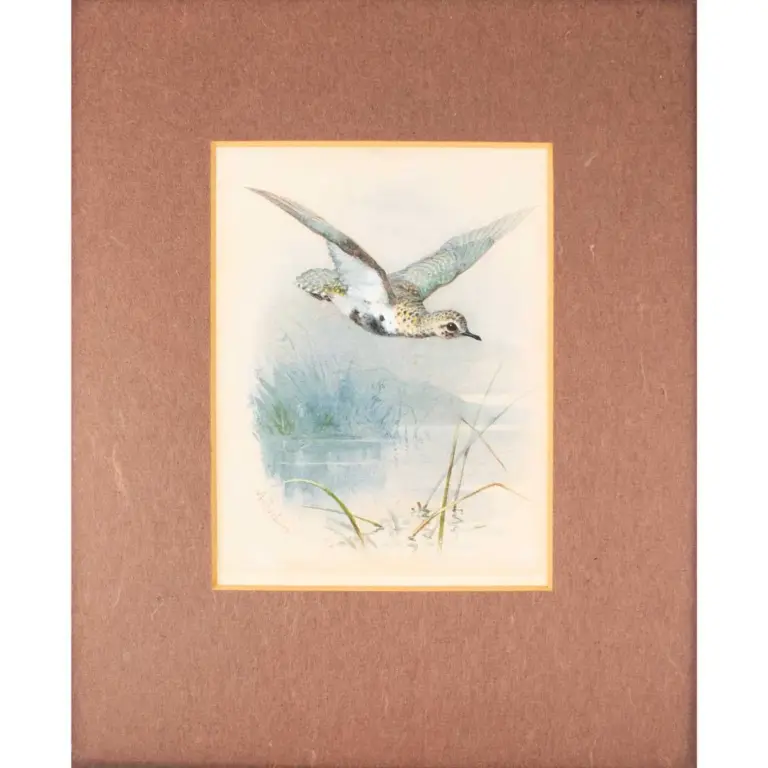
A Golden Plover in flight.
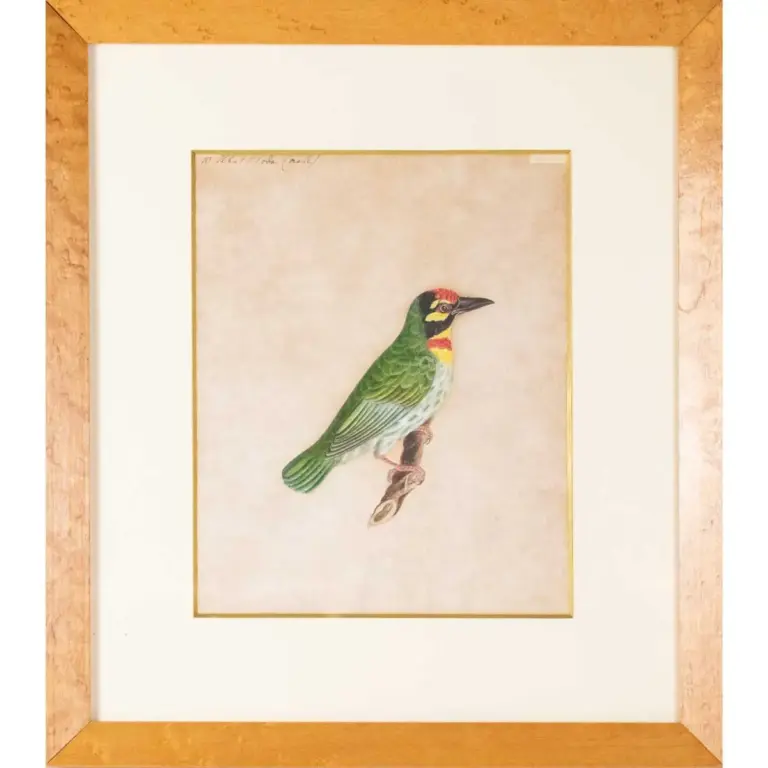
Indian Birds. A Fine Collection of Watercolours in Gouache,
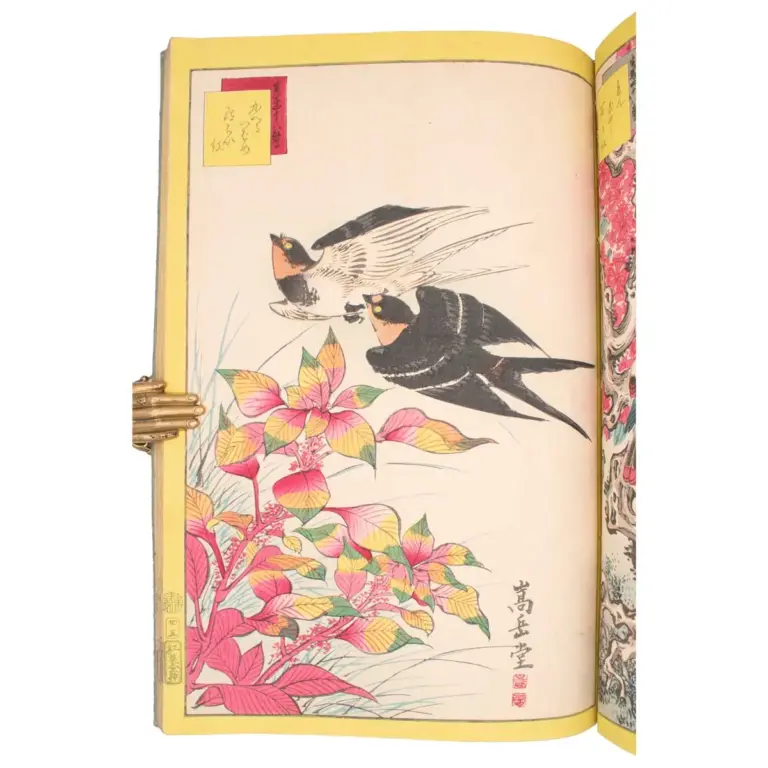
A Very Fine Album of Fifty Kacho-E (Bird & Flower Prints).