Marshall Rare Books
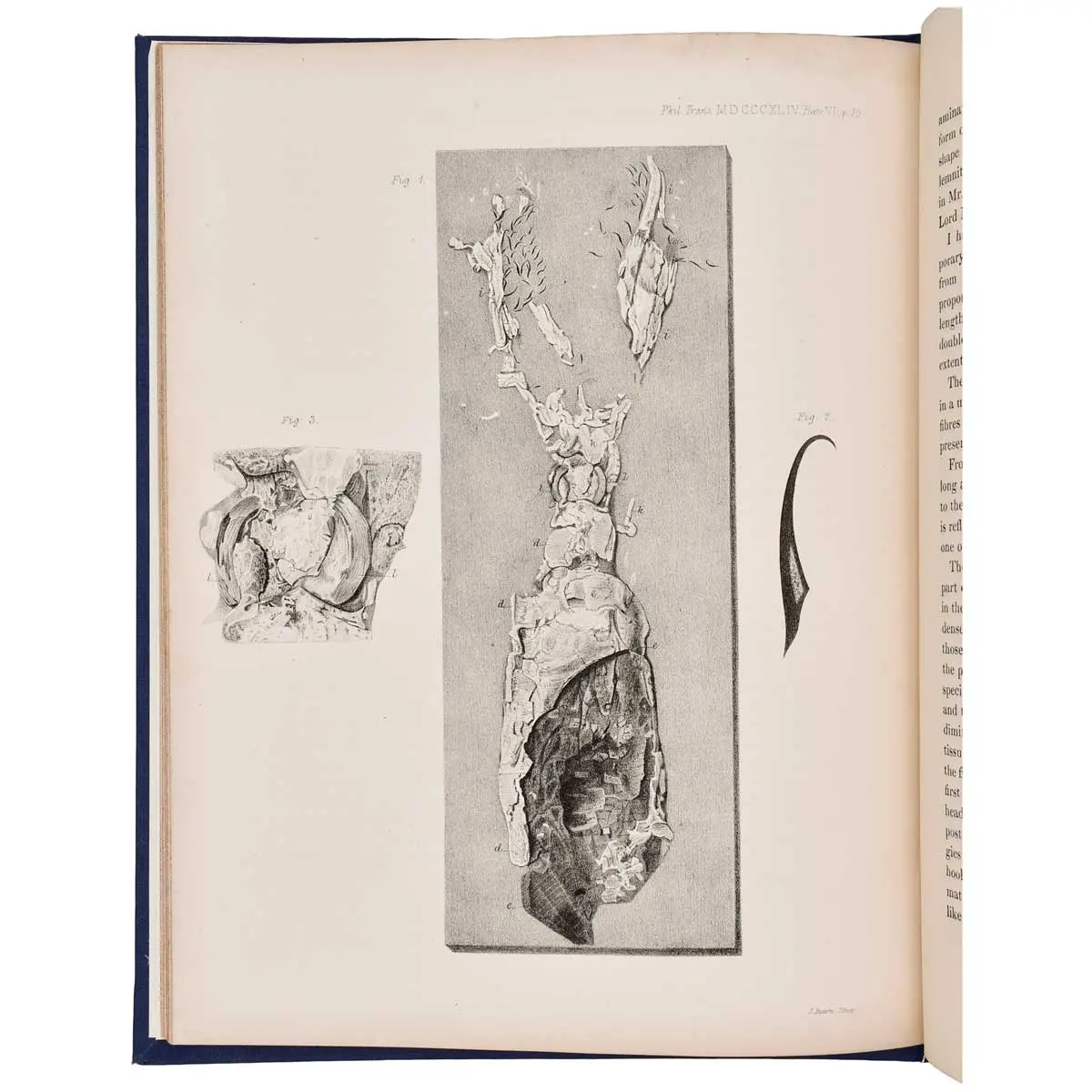
A Description of certain Belemnites, preserved , with a great proportion of their soft parts, in the Oxford Clay, at Christian-Malford, Wilts
In 1837 Richard Owen, acknowledged as the greatest comparative anatomist of his day, changed the focus of his work to palaeontology when he began to study Darwin's South American fossils.
FIRST EDITION, 65-85, [1], 7 lithograph plates, rebound in navy cloth, folio, from Philosophical Transactions of the Royal Society of London. For the year MDCCCXLIV., 1844
Owen’s paper is an early recreation of the soft body parts that produced the fossil sea-shells of the belemnite, an extinct cephalopod. Owen begins by summarising the various opinions of different authors regarding the nature of the belemnite. He then refers to the discovery of the ink-bag of the Belemnite which led him to place the belemnite in the order of the naked Cephalopods, removing it from the Polythalamacea of De Blainville. Owen goes on to describe the structure of the shell and, as the specimens was well preserved, he was able to describe the form and extent of the mantle—its continuation over the exterior of the shell, and the arrangement of its muscular fibres.
In 1837 Richard Owen, acknowledged as the greatest comparative anatomist of his day, changed the focus of his work to palaeontology when he began to study Darwin’s South American fossils.
Books you may also like
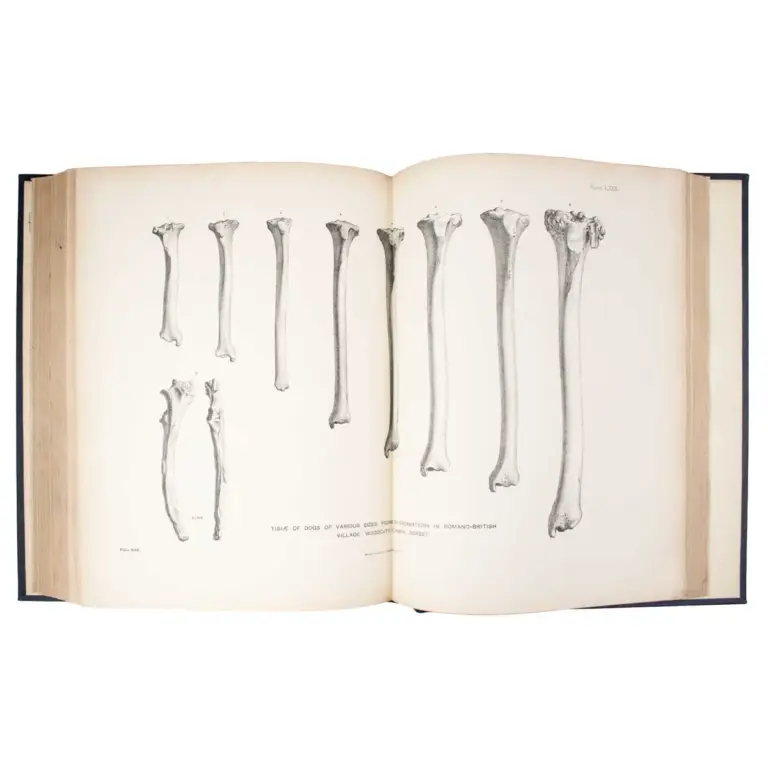
Excavations in Cranborne Chase, near Rushmore, on the borders of Dorset and Wiltshire.
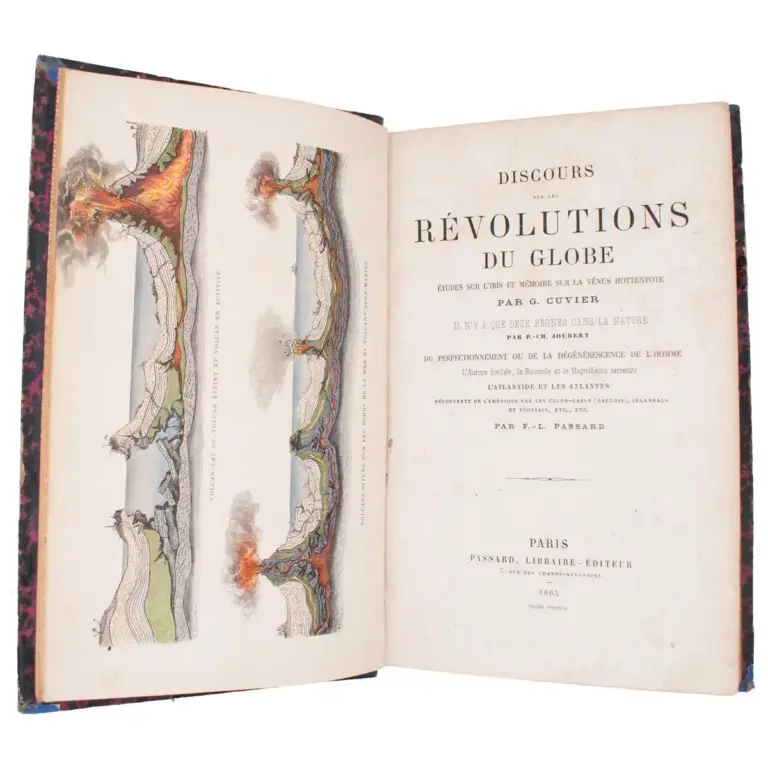
Discours sur les Révolutions du Globe…

Principles of Geology, Being an Attempt to Explain the Former Changes of the Earth’s Surface, by Reference to Causes Now in Operation.

The Silurian System, Founded on Geological Researches in the Counties of Salop, Hereford, Radnor, Montgomery, Caermarthen, Brecon, Pembroke, Monmouth, Gloucester, Worcester, and Stafford