
 Marshall Rare Books

De La Demonomanie Des Sorciers…,

ONE OF THE MOST EMPHATIC AND RUTHLESS WORKS ON DEMONOLOGY.
Third edition, [12], 252pp.,, ã4 ~e4 ~i4 A-Z4 Aa-Zz4 AAa-SSs4, woodcut printers device to title,Roman and some Italics, infrequent Greek and Hebrew, historiated and foliated initials, title with wood-engraved printer’s device, headers and footers, infrequent contemporaneous marginal annotation, occasional worm holes not affecting text, 4to, Paris, Jaques du Puys, 1582
De La Demonomanie Des Sorciers… is Jean Bodin’s major work on sorcery and witchcraft persecutions. It was first issued in 1580, with ten editions being published by 1604. De la Demonomanie Des Sociers was perhaps the most important and widely discussed treatment of witchcraft in the period when witch trials were on the increase everywhere.
Bodin published De La Démonomanie Des Sorciers… after reading the 1577 edition of Weyer’s De Praestigiis Daemonum. He was already enraged by the leniency of French judges and the neutrality of the French court: the ‘Erasmian’, ‘Platonic’ Court of Catherine de Medici. Hastily, he added an appendix denouncing Weyer as an infamous patron of witches and a criminal accomplice of the Devil. Every champion of demonological science from Bodin onwards took care to attack the ‘vain ravings’ of Weyer.
Writing at the very extreme end of the demonological spectrum, only Jean Bodin was prepared to believe that nothing was impossible. Although one or two followed him, most rejected the latitude of belief to which his view gave rise. It was his view that it was wrong to put limitations on what it was possible for witches and demons to do. This was because they were not governed by the laws of nature after all, their actions belonged to the supernatural and unless mortals wished to challenge divine omniscience by giving a reason for everything, they had to be taken on trust.
Bodin was a hardline persecutor, determined to root out the enemies of Christendom and the state and punish them with fire. In De La Demonomanie Des Sorciers… we have a rare insight into the inner world of a witch-hunter. Bodin wrote in extreme terms about procedures in sorcery trials, opposing the normal safeguards of justice. He gave a report of a 1552 public exorcism in Paris, and of the case of Magdalena de la Cruz of Cordova, an abbess who had confessed to sexual relations with the Devil over three decades. He asserted that not even one witch could be erroneously condemned if the correct procedures were followed, because rumours concerning sorcerers were almost always true. Bodin’s attitude has been called a populationist strategy typical of mercantilism.
One of the shocking features of the European witch craze is that some of the most highly trained lawyers and sophisticated intellectuals of the age were its keenest proponents. Jean Bodin was the universal genius of his age. Bodin the Aristotle, the prophet of comparative history, of political theory, of the philosophy of law, of the quantitative theory of money, and of so much else, who yet, in 1580, wrote the book which, more than any other, reanimated the witch-fires throughout Europe. A question that has often been asked of De La Demonomanie Des Sorciers…: how could Jean Bodin have written it? One does not expect such writing from a man whose range of intellectual interests and stature as a thinker have earned him the reputation of the Montesquieu of the sixteenth century. How could he have reconciled his humanism with his inhumanity? Stuart Clark suggests “the theory and practice of witch prosecutions raised political issues, while certain traditions of statecraft raised demonological ones.” Bodin lived at a time of great upheaval, when France was ravaged by the wars of religion between the Catholics and the Huguenots. Like many of his contemporaries, he sensed an acute crisis in the state and in society but he also envisaged a dangerous undermining of universal harmony. The Demonomanie is, therefore, a punitive book because the need to punish had been seriously neglected. It is a dogmatic book, for only moral absolutism could overcome the appalling disorder of the 1570s and 1580s. In intellectual terms, the Bodin who urged the judicial destruction of witches was on common ground with the Bodin who reformulated the first principles of absolute sovereignty.
Provenance:
Francoys de Buc, [François Herbert, Seigneur of Yvelines, near Versailles]; contemporaneous ownership inscription to base of title-page.
Dr. Alan Gauld (1932-2024), parapsychologist and historian of psychical research, formerly of the University of Nottingham; his ex libris label and ownership inscription.
[USTC:77638; Witch Craze, Roper, 2004; Thinking with Demons, Clark, 1999]
Books you may also like
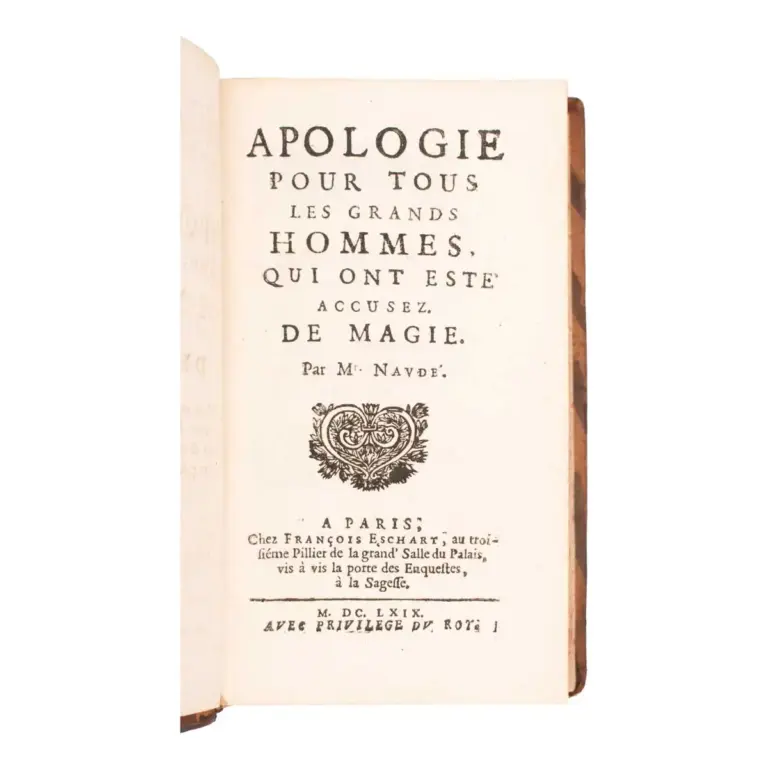
Apologie Pour Tous Les Grand Hommes Qui Ont Este Accusez de Magie.
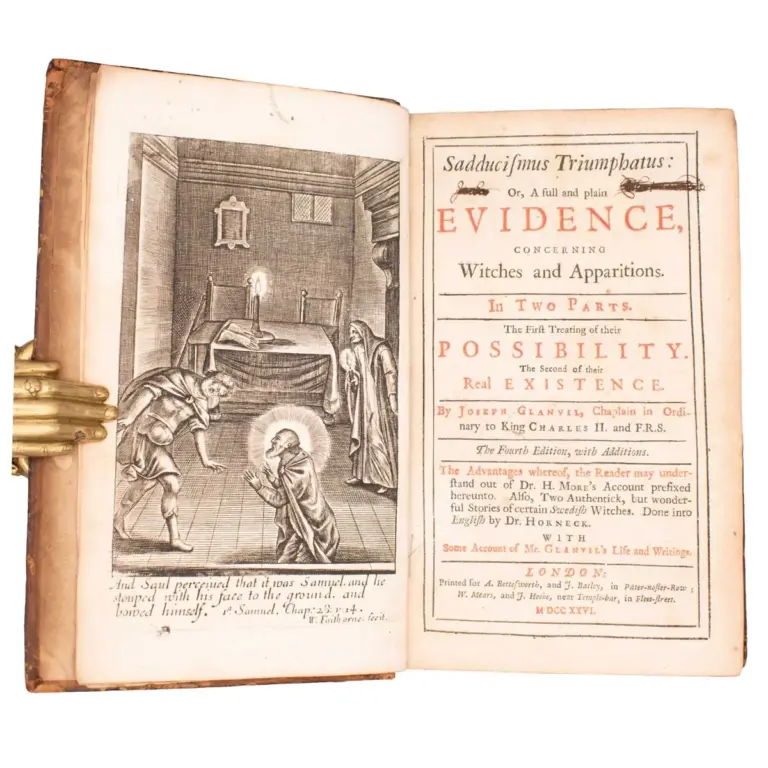
Saducismus Triumphatus: or, Full and Plain Evidence Concerning Witches and Apparitions.
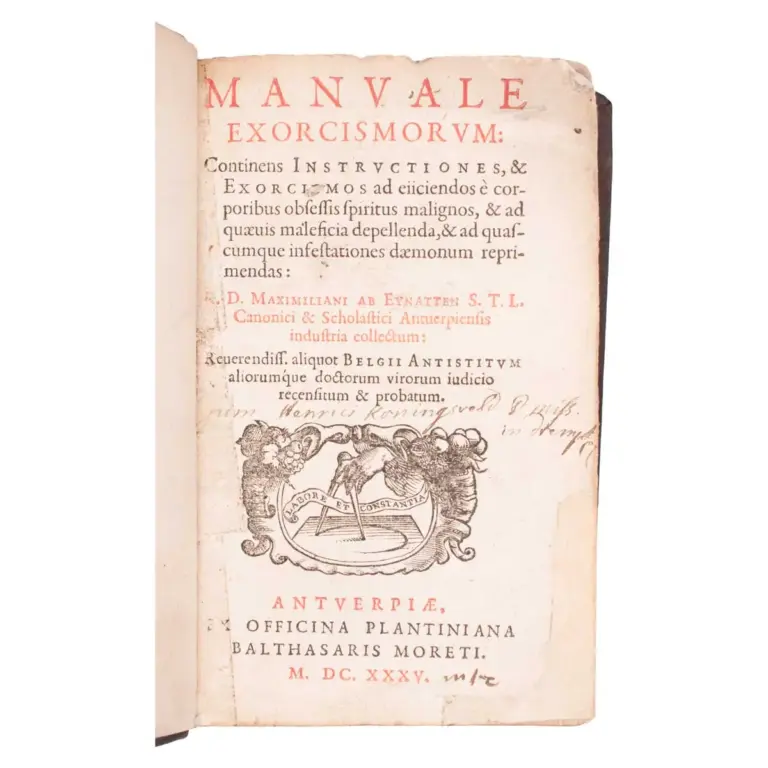
Manuale Exorcismorum

Discours, et histoires des spectres, visions et apparitions des esprits, anges, démons, et âmes, se monstrans visibles aux hommes

Histoire de l’Inquisition et son origine

Dictionnaire Infernal, ou Bibliothèque Universelle, sur les êtres, les personnages, les livres, les faits et les choses…