Marshall Rare Books
Note overo Memorie del museo del conte Lodovico Moscardo, nobile veronese
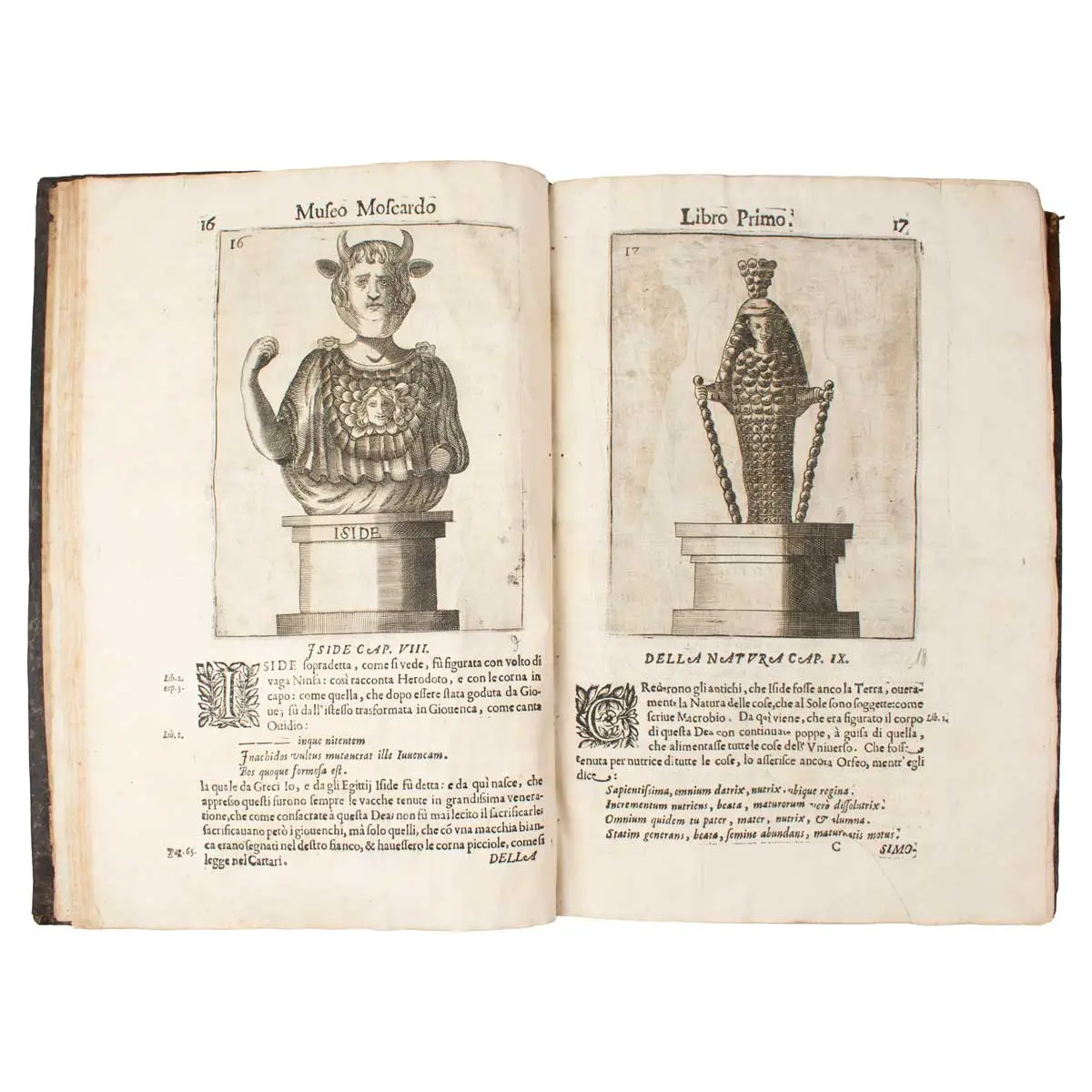
ONE OF THE MOST FAMOUS CABINETS OF CURIOSITIES OF THE 17TH CENTURY.
Padua: per Paolo Frambotto, 1656,Folio [320 x 230mm] , 9 (10) ll, 306 (307) pp, 6 ll,(p.49/50 misbound, some mispagination, contemporary panelled calf gilt with gilt arms on upper and lower covers, engraved allegorical and printed titles, illustrated with 114engravings, mostly half -page, the printed title and 2 other leaves slightly trimmed, a few damp stains but an unpressed copy of a fine cabinet.
First Edition of Moscardo’s description of his wonderful Cabinet.
The catalogue is divided into three sections: the first deals with antiquities, inscriptions, amulets, and statues; the second with minerals and fossils; and the third with corals, shells, marine animals, animals, fruits, and plants.
The illustrations, consisting of an allegorical frontispiece and more than 100 figures engraved in the text, are the work of the Veronese artist Alberto Pasi. Animals, fantastical creatures, minerals, fossils, shells, and ethnographic objects were all displayed there.
For thirty years, Lodovico Moscardo assembled this cabinet of curiosities, which was later enriched by the collection of Francesco Calzolari, which he had acquired.
Francesco Calzolari (1522 –1609), a wealthy pharmacist and botanist, founded a natural history and art collection. His grandson by the same name (born c. 1585) expanded it, and it became one of the most extensive in Italy. The strength of the collection were the botanical and mineralogical specimens.
Moscardo acquired Calzolari’s cabinet and continued to collect a variety of exotic antiquities, shells, minerals, animals, fruit, inscriptions, and coins.
“The catalogues of seventeenth-century collections such as those of the Veronese noble Lodovico Moscardo …were all models of wit and persuasion; dwarfs, chameleons, birds of paradise, and abnormal trees formed by nature happily co-existed alongside mathematical instruments” (P. Findlen, Possessing Nature. Museums, Collecting, and Scientific Culture in Early Modern Italy, Berkeley, 1994, p. 42). Graesse II, 613; Grinke, From Wunderkammer to Museum, no. 23; Nissen, 2898
Books you may also like
Ost- und West-Indischer wie auch Sinesischer Lust- und Stats-Garten
Museum Worsleyanum . Or a Collection Antique Basso-Relievos, Bustos, Statues and Gems; with views of places in the Levant taken on the spot.
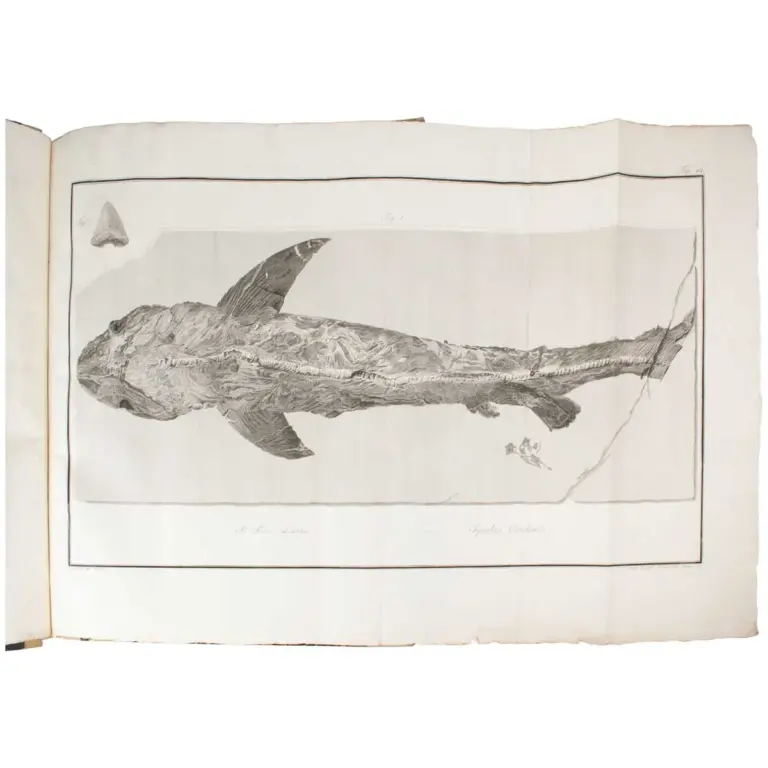
Ittiolitologia Veronese del Museo Bozziano ora annesso a quello del Conte Giovambattista Gazola e di altri gabinetti di fossili Veronesi con la versione Latina.