Marshall Rare Books
Ittiolitologia Veronese del Museo Bozziano ora annesso a quello del Conte Giovambattista Gazola e di altri gabinetti di fossili Veronesi con la versione Latina.
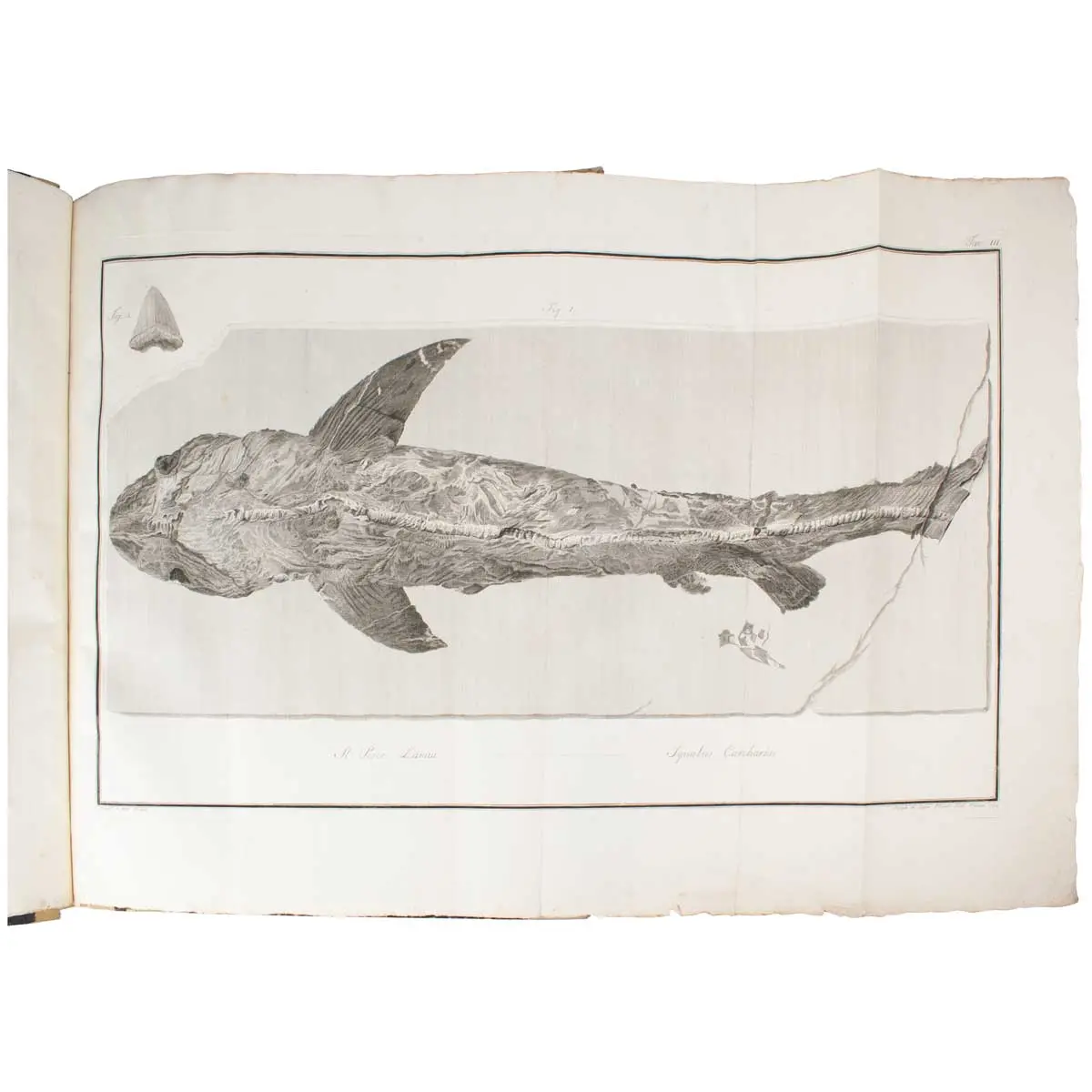
THE GREATEST 18th CENTURY WORK ON FOSSIL FISH WITH MAGNIFICENT ILLUSTRATIONS
Verona, Stamperia Giuliari, 1796. First and only edition. Two Volumes, Elephant folio (526 x 377 mm), Fine 19th century half vellum gilt over marbled boards, with 76 engraved plates, 19 folding (double-page or larger). The plates were drawn by Leonardus Manzati, Joseph Buffetti and Gio. Batta Grudel and engraved by Jos. ab Aqua and Ang. Guelmi.
This is the greatest 18th century work on fossil fish with magnificent illustrations.
The first plate is a topographical map: “ Carta Topografica di Bolca e Vestena Nuova”. The second plate is a beautiful landscape near Verona: ”Veduta della Lastrara dalla parte d’Oriente sul confine del Territorio Vincentino col Veronese”, the plates displaying fossil fish are outstanding and many fold out to the size of panoramas.
Serafino Volta (1764-1842) describes the fossil fish collection of the Museo Bozziano, including the collection of Count Giovambattista Gazola.
‘The Natural History Museum’s Palaeontology Section holds rich collections of vertebrate fossils. Of these, one of the most important, historically and scientifically speaking, is undoubtedly the collection of fish fossils from Mount Bolca. This geological layer, which contains mainly fish and plant fossils, formed in the Middle Eocene Age (around 50 million years ago). It is one of the richest, most famous in the world with regard to Tertiary ichtyofauna. In 1782, Lazzaro Spallanzani bought a wonderful collection of 65 fish from Vincenzo Botta, which included the mould and cast of a Mene rhombea whose colours are partially preserved. These fossils and the fossils owned by Count Gazola were studied by Serafino Volta, who later published his monumental, Ittiologia Veronese, which describes 123 fish species from the Bolca layer.’ Museo Bozziano.
There are 74 plates, with 123 fish species, from Monte Bolca near Verona and most of these fossils were displayed in the private museum of Count Gazola. However, when the French conquered Verona in 1797, Napoleon
had the collection sent to the Paris Museum. In 1803, Count Gazola went to Paris and petitioned Napoleon to allow the fossils to return. Today most of this impressive collection is the centrepiece of the Municipal Museum of Natural History in Verona.
The story of these famous fossils, and of Volta’s magnificent folio, is told in detail in Frigo and Sorbini, 600 fossili per Napoleone (Verona, 1997).
Murray, II, p.237 (“75 plates”). Nissen ZBI, 4289. Ward & Carozzi, 2260 (describing a copy with only 11 plates).
Books you may also like
Metallotheca. Opus posthumum, auctoritate, & munificentia Clementis undecemi Pontificis Maximi ex tenebris in lucem eductum; Opera autem, & studio Joannis Mariae Lancisii… illustratum.
Malacostraca Podophthalmata Britanniæ; or, Descriptions of such British species of the Linnean Genus Cancer as have their eyes elevated on footstalks.
Museum Worsleyanum . Or a Collection Antique Basso-Relievos, Bustos, Statues and Gems; with views of places in the Levant taken on the spot.
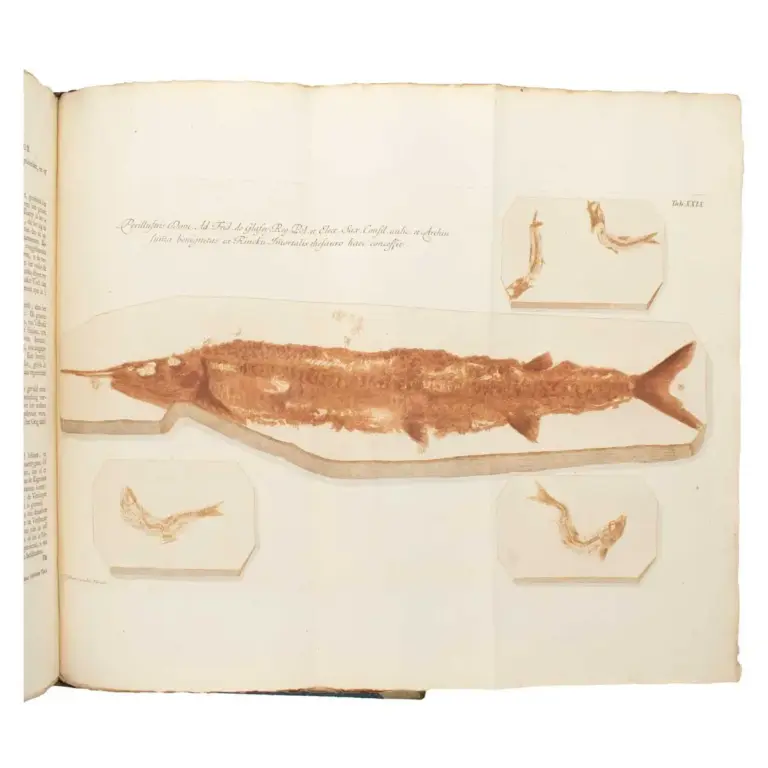
De natuurlyke historie der versteeningen, of uitvoerige afbeelding en beschryving van de versteende zaaken, die tot heden op den aardbodem zyn ontdekt: …