 Marshall Rare Books

hochgelehrten weytberümpten Herrn D. Conrat Gessnern zuosamen getragen unnd beschriben unnd hernaher durch den wolgelehrten Herrn Jacobum Carronum gemehrt und in dise Ordnung gebracht; an yetzo aber mit sondrem Fleyss verteütscht.
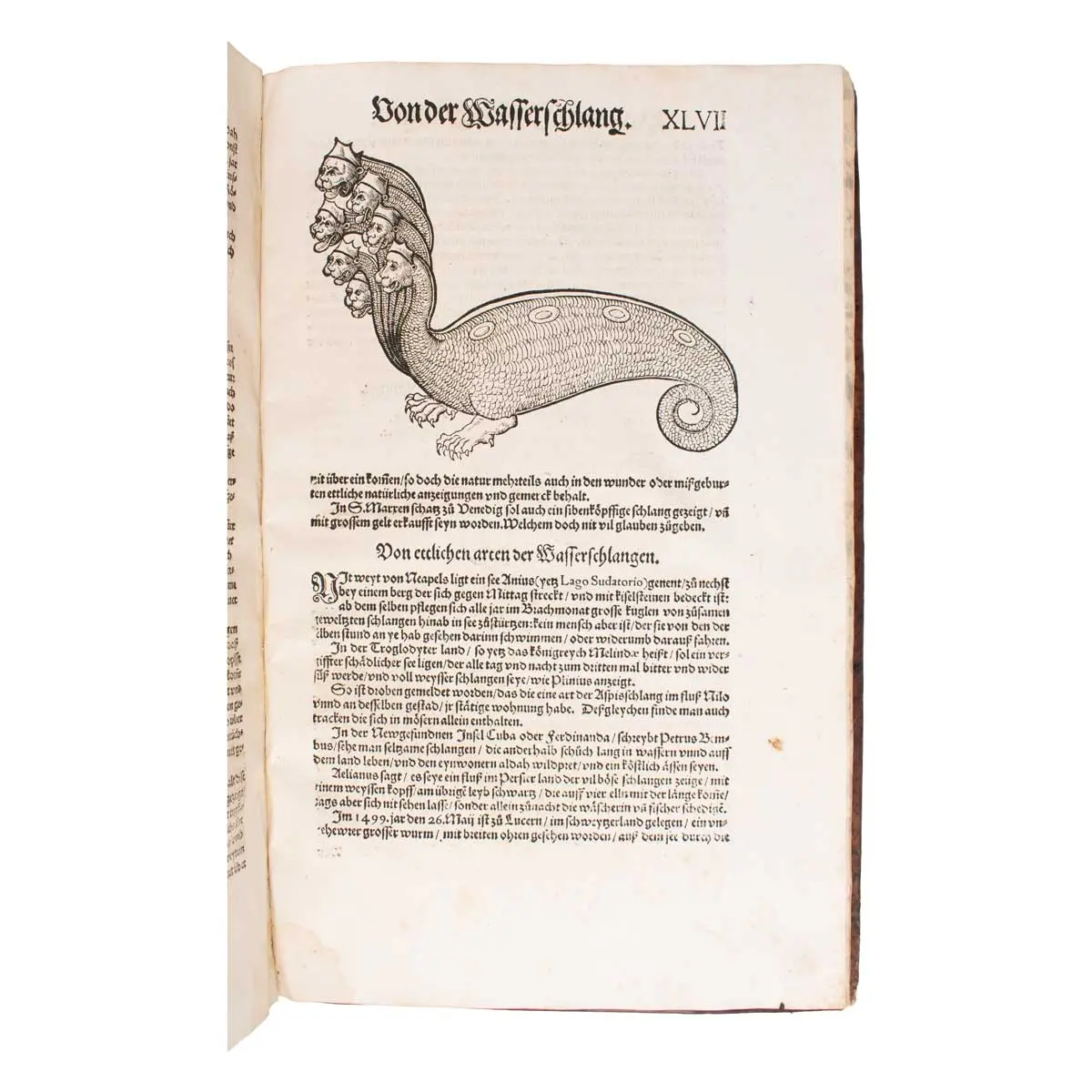
GESSNER’S GREAT BOOK ON SNAKES AND SCORPIONS
Zürich, Froschauer 1589. Two Parts in One Volume, Folio (385 x 250 mm) 4 leaves, 72 numbered leaves with 2 title vignettes, 23 (2 full-page) woodcuts. A fine binding of 17th century calf, gilt spine in compartments.
Large-Paper copy of the first German edition (after the Latin edition of 1587) of the famous “Book of Snakes” by Conrad Gessner (1516–1565), published posthumously. Includes a second title (beginning on folio 62): “De scorpione. A brief description of the scorpion,…”.
Dragons, in the original sense of the word, are real animals. These iconic monsters of European folklore are the literary descendants of ordinary snakes that evolved through the centuries with much help from the discipline of natural history…. Particularly important among dragon descriptions in the literature of natural history is that of Conrad Gessner in the snake volume of his animal encyclopaedia, Historiae animalium. Published in 1587, it incorporates a more comprehensive review of dragon lore and literature than any previous work. This makes it an important reference for describing the conceptual evolution of the dragon from an ordinary snake into a fabulous monster. The volume was first published in Latin, then in German in 1589 under the title Schlangenbuch.”
Conrad Gessner (1516 – 1565) was an energetic scholar who had a love of the natural world, especially the mountains around his native Zurich. Born into a poor family, the young Gessner paid for his schooling by collecting medicinal plants with his great-uncle. As he grew, he impressed his instructors with his keen intellect, to the point that they were willing to sponsor his academic career. Gessner studied theology, physics, and medicine, as well as Greek, Latin, and Hebrew.
In 1541 he received his doctoral degree in medicine and was a practicing physician for the rest of his life. His passion, however, was for the natural world. Gessner often took his students on field trips to the mountains to collect animal, plant, and mineral specimens.
In 1551, he published the first part of his masterwork, Historiae Animalium, which described four-legged animals that gave birth to live young. Over the next several years, he expanded this work to include volumes on egg-laying reptiles (1554), birds (1555), and fish (1558). A fifth volume, composed of Gessner’s notes on snakes and scorpions, was published in 1587 after his death. Each of these volumes was heavily illustrated with detailed woodcuts of animal specimens. Gessner drew on many sources to create his Historia, including accounts from classical authors, correspondences from other natural historians, and his own personal observations. The end product was an encyclopedia that attempted to describe animals as precisely as possible by finding consensus between many different sources of information.
Lit.: Phil Senter, Uta Mattox, Eid. E. Haddad. Snake to Monster: Conrad Gessner’s Schlangenbuch and the Evolution of the Dragon in the Literature of Natural History; in: Journal of Folklore Research, Vol. 53 (2016), pp. 67-124.
Books you may also like
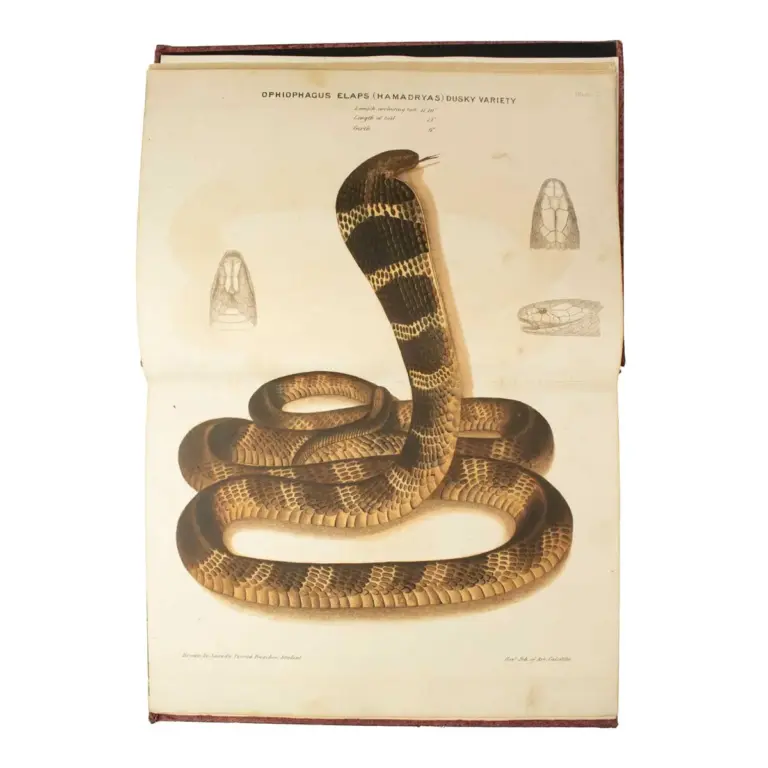
The Poisonous Snakes of India for the use of the Officials and others Residing in the Indian Empire.
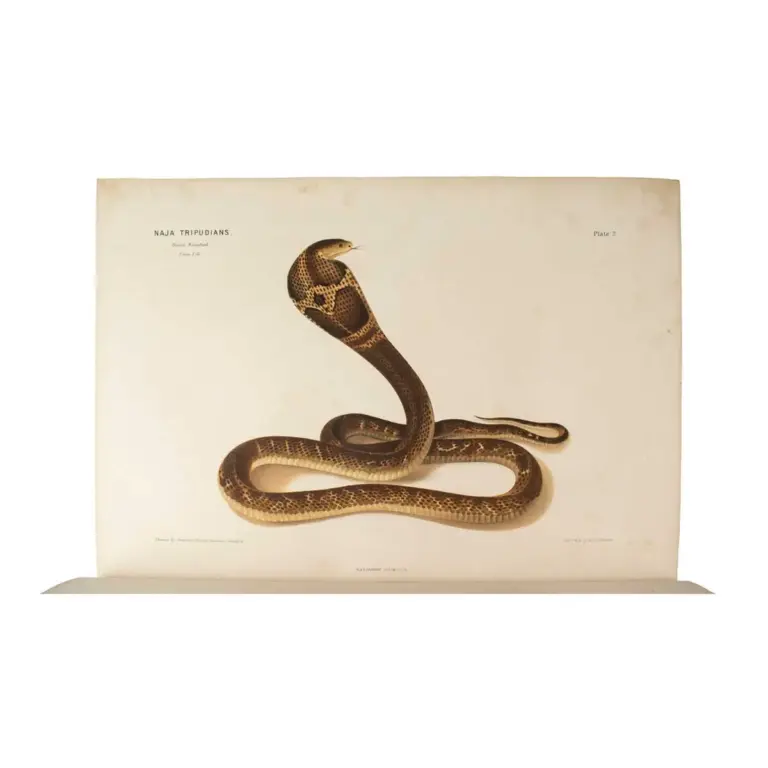
The Thanatophidia of India. Being a Description of the Venomous Snakes of the Indian Peninsula with an Account of the Influence of their Poison on Life and a Series of Experiments.