Marshall Rare Books
An Advertisement to the Jury-Men of England, Touching Witches. Together with a Difference between an English and Hebrew Witch.
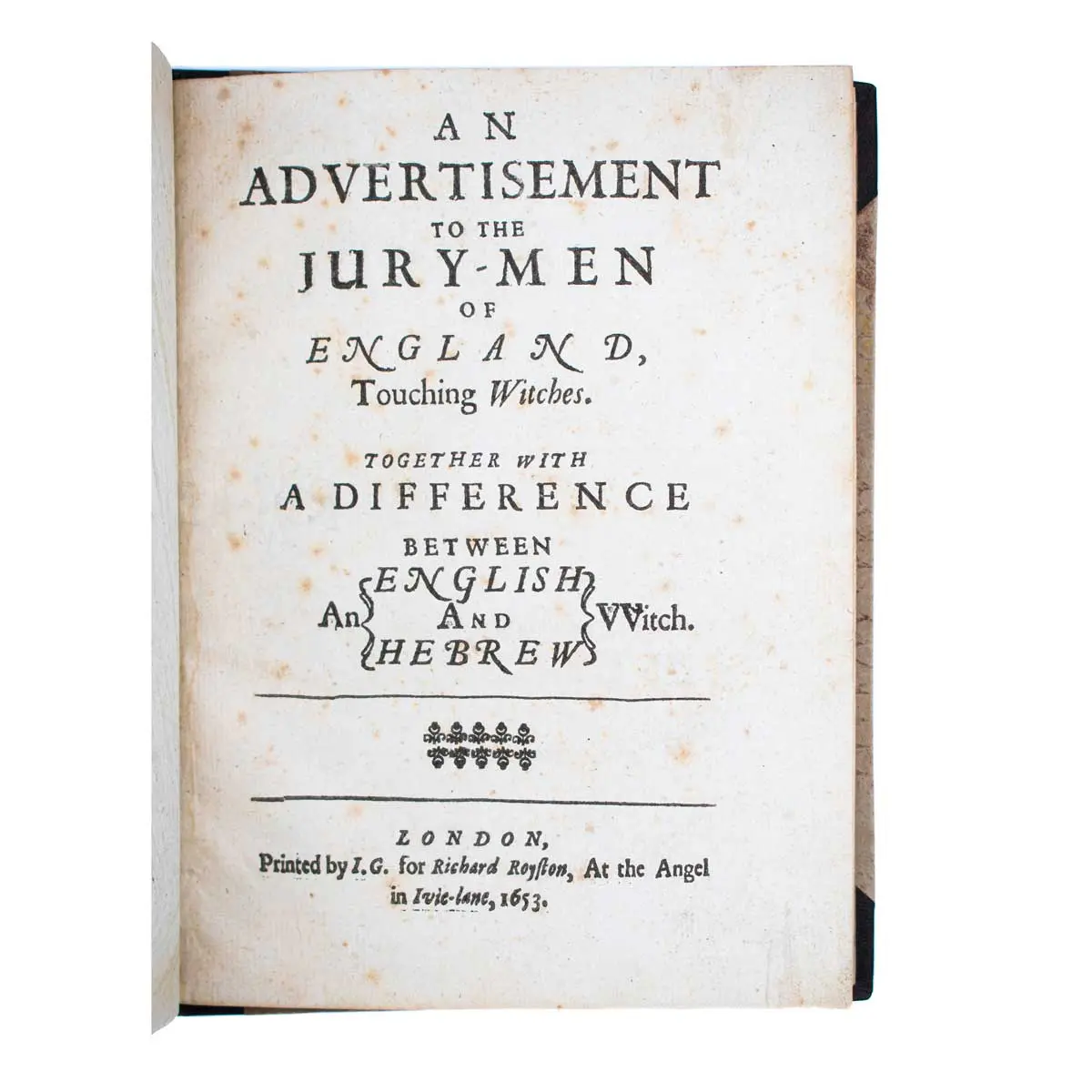
An Unrelenting Sceptical Attack on the Covenantal Theory of Witchcraft
FIRST EDITION,[8], 24pp., woodcut and factotum initials, woodcut headpiece and type ornaments, light foxing, bookplates of Henry Marshall and Fox Pointe, half calf over marbled boards, 4to, London: R. Royston, 1653.
Sir Robert Filmer (d.1653), a royalist political writer, was a supporter of divine right monarchy who advocated moderation in the trial of witches. Knighted by Charles I, Filmer was known for his affability, his learning and his views on government and the monarchy. Filmer was legally trained, and was a justice of the peace of considerable standing in his native Kent. Shortly before his death, Filmer wrote An Advertisement to Jurymen of England Touching Witches, partly in response to the execution of witches at Maidstone in Kent in 1652 but mainly due to his anti-Calvinism.
Remarkably, Filmer thought that both Catholic and Protestant churches had created witches in their own mirror images—that witches were nothing but the contraries of Christians. He did not wish to infer that some other, religion-neutral account of the witches’ covenant might be believable. The rest of his pamphlet makes clear his rejection of the whole idea. What Filmer found so culpable was the pretence that witchcraft and magic had a real basis in the use of ‘familiar spirits’ or in pacts with devils; that they did have such a basis he rejected. His remark stands, therefore, as a revealing contemporary interpretation of the most central component of witchcraft as (what would now be called) a cultural construct.
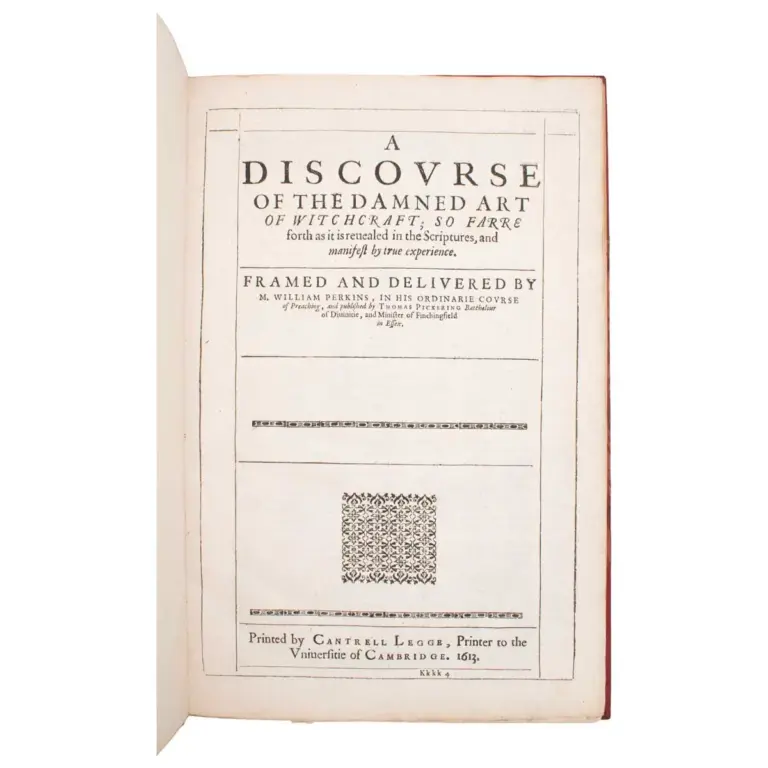
This unrelentingly sceptical work has recently been re-evaluated by Ian Bostridge. In Bostridge’s analysis, “Filmer’s tract, which contains a lengthy critique of Williamm Perkin’s Discourse of the Damned Art of Witchcraft, formed part of a general attack on Calvinism as he conceived it, both in its covenantal and original forms… in his central task of destroying Perkins’ covenantal theory of witchcraft, Filmer also undermines the fundamentals of covenantal theology itself.”
A scarce but popular work with two editions being published posthumously.
[ESTC:R202078; McAlpin Coll., III; Wing (2nd ed.), F909; Thomason, E.690[6]; Witchcraft and its Transformations, c.1650-1750, Bostridge, 1997;Witch-Hunting and Witch Historiography: Some Anglo-Scottish Comparisons, Sharpe, 2002; Thinking with Demons, Clark, 1999]
Books you may also like
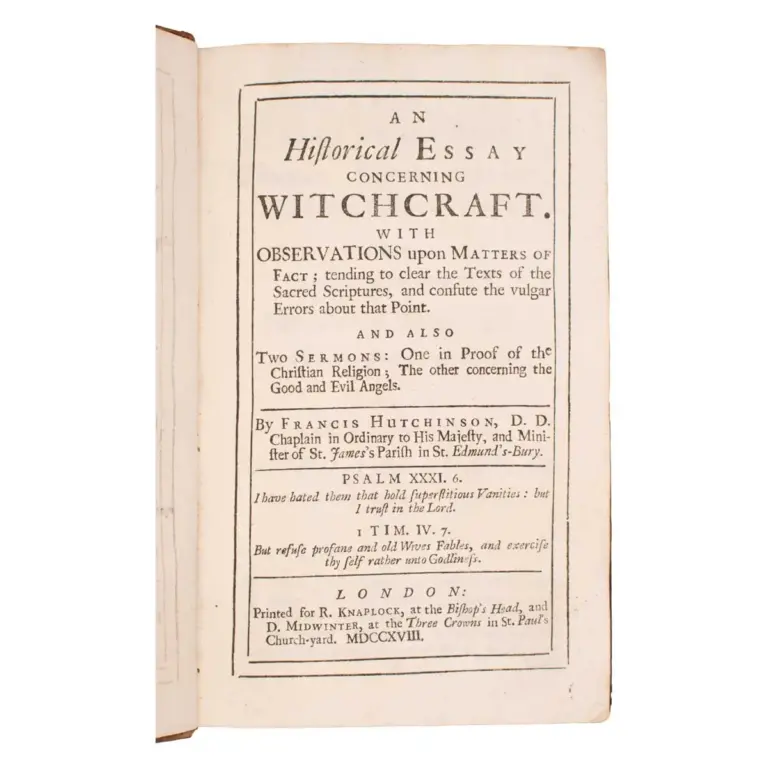
An Historical Essay Concerning Witchcraft. With Observations upon Matters of Fact; tending to clear the Texts of the Sacred Scriptures, and confute the vulgar Errors about that Point.
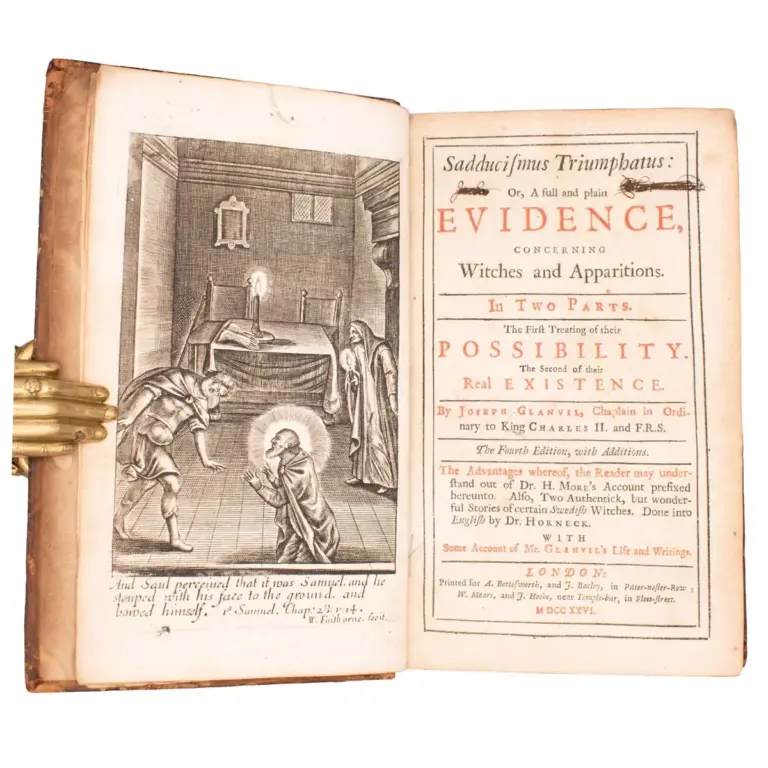
Saducismus Triumphatus: or, Full and Plain Evidence Concerning Witches and Apparitions.