Marshall Rare Books
A Discourse of the Damned Art of Witchcraft, so farre forth as it is revealed in the Scriptures, and manifest by true experience
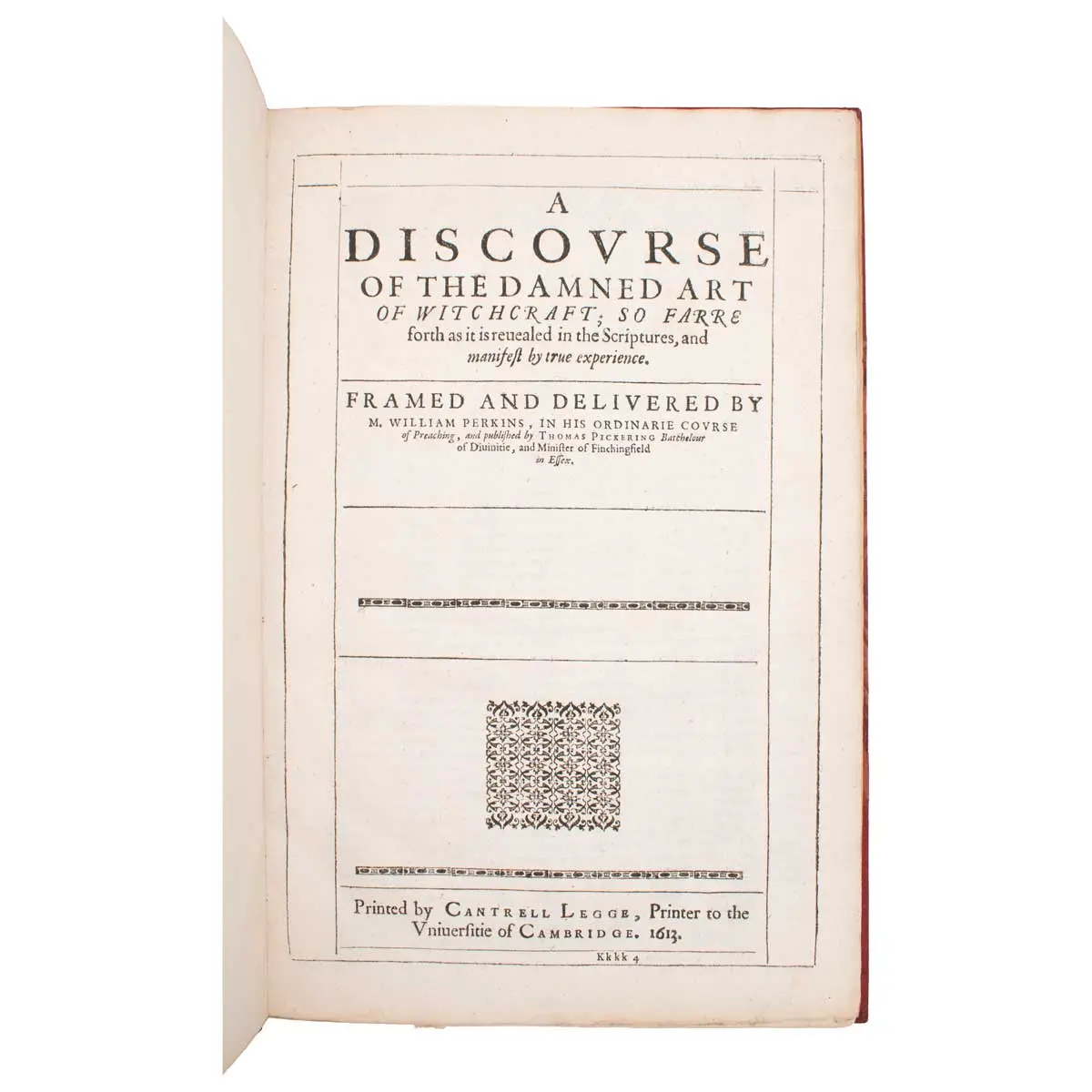
A Scarce Pamphlet by prominent English demonologist and Puritan preacher, William Perkins.
[Extract from The Workes], [5], 607-652pp., title with woodcut typographic ornament, woodcut typographic head-and-tail-pieces and decorative initials, contemporary ink marginalia,occasional light spotting. Red morocco bookplate of William Foyle to front pastedown, modern red half morocco, gilt, t.e.g., folio, Cambridge, Printed by Cantrell Legge, 1613
A Scarce Pamphlet by prominent English demonologist and Puritan preacher, William Perkins.
William Perkins (1555-1602) wrote numerous and uncompromising works combating Roman Catholicism, maintaining an extreme evangelical position throughout. Discourse of the Damned Art of Witchcraft was originally delivered as a sermon before being published posthumously in 1608. By 1610, Perkins surpassed King James I as the authority on witchhunting in Great Britain. This popularity may have been caused by the King’s later defection as a witch hunter, as well as Perkins’ refusal to address the European demonologists and his almost exclusive appeal to the Bible.
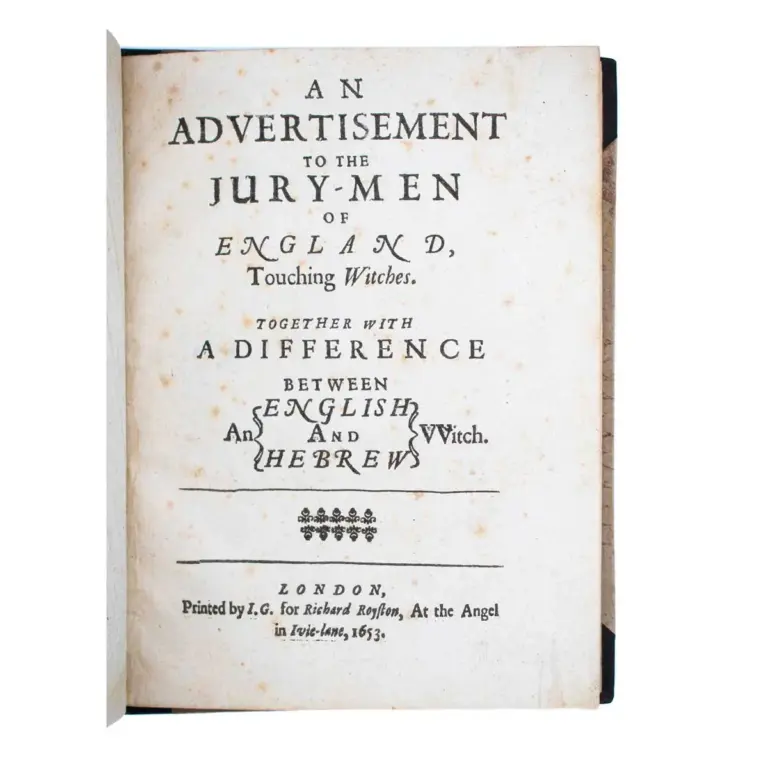
In A Discourse of the Damned Art of Witchcraft Perkins affirms the existence of pacts with the devil and urges death for convicted witches. As a Protestant, Perkins was more critical of witchcraft as an act of apostasy, as a denial of the Christian faith through the pledge of allegiance to Satan, than of any real acts of magic perpetrated by the witch. His work was so persuasive that Robert Filmer, in his Advertisement to the Jurymen of England (1653) still thought it necessary to refute Perkins’ arguments of half a century earlier. In 1693 Cotton Mather included a summary of Discourse in his work The Invisible World.
[BOUND WITH]
A Resolution to the Country-man’ and ‘Christian Oeconomie’.
[Hope Robbins, The Encyclopedia of Witchcraft and Demonology]
Books you may also like
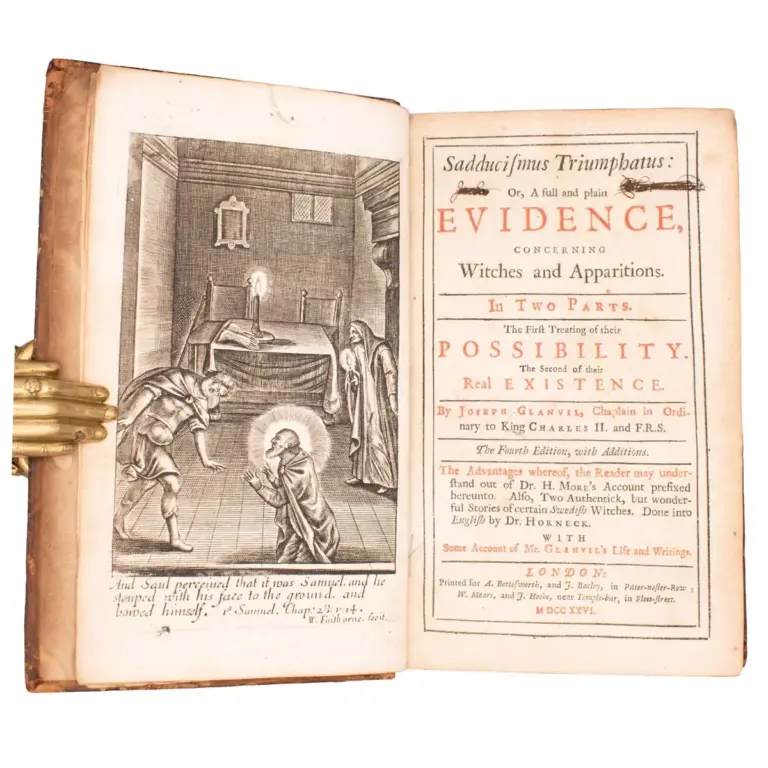
Saducismus Triumphatus: or, Full and Plain Evidence Concerning Witches and Apparitions.
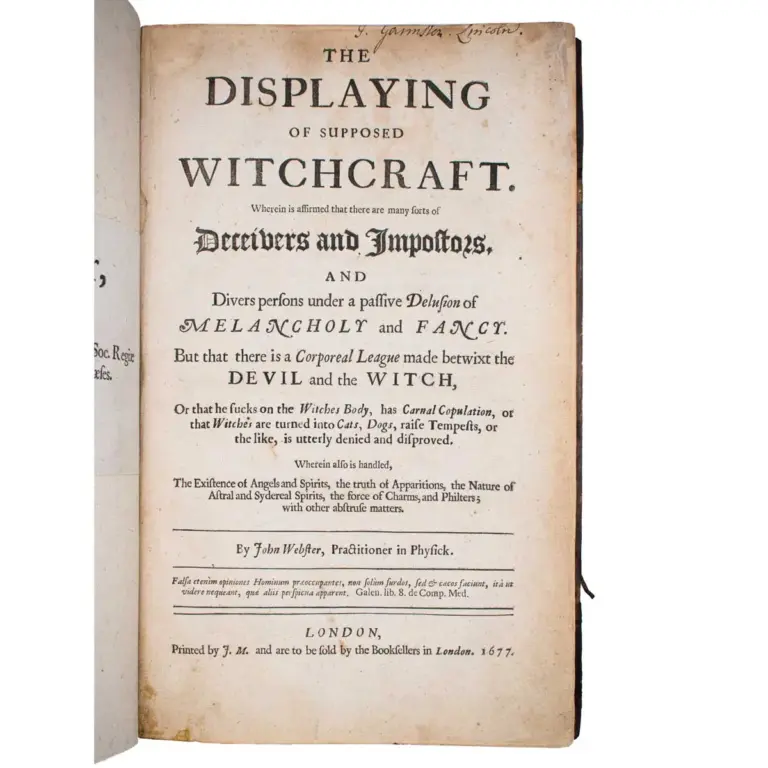
The Displaying of Supposed Witchcraft. Wherein is affirmed that there are many sorts of Deceivers and Imposters. And Divers persons under a passive Delusion of Melancholy and Fancy.
Memorialls; or, The Memorable Things that Fell Out Within This Island of Britain from 1638 to 1684. Edited from the MS. by Charles Kirkpatrick Sharpe, Esq.