 Marshall Rare Books

Ortus Sanitatis. De herbis & plantis. De Animalibus & reptilibus.
The First Edition printed in Italy, of the first illustrated natural history encyclopaedia.
Venice: Bernardinus Benalius & Johannes de Tridino alias Tacuinus, 1511.
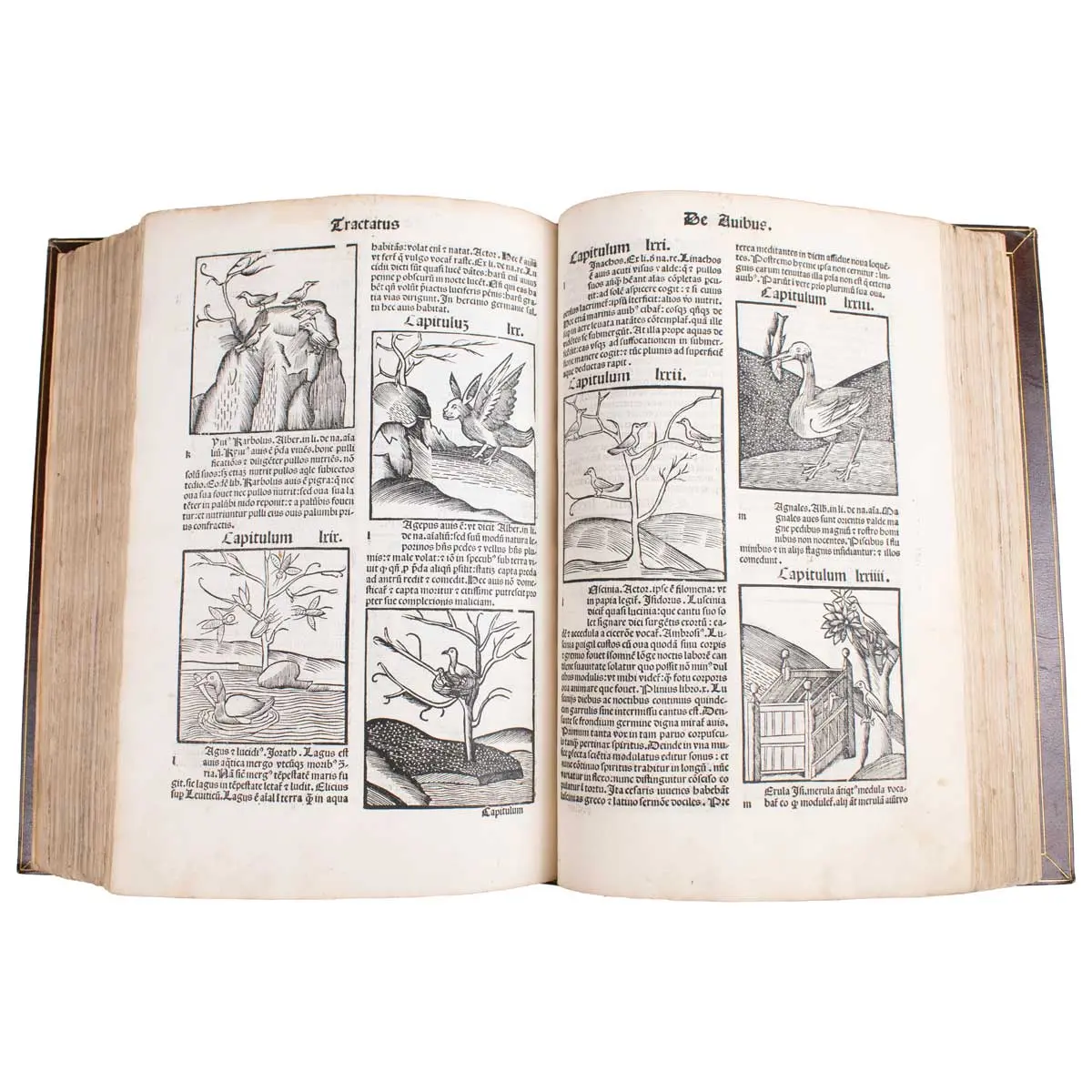
The fifth edition of the Latin text, Chancery folio (286 x 198 mm). Early panelled calf, rebacked,pp. 367 leaves, without the final blank. Double column, 53 lines plus headline, initial spaces with guides. Title within a decorative woodcut border, 3 full-page woodcuts and more than 1,000 woodcut engravings of plants, animals, birds etc, including the famous Skeleton plate, one page of 18th-century manuscript notes in Italian bound in after the ‘Tractatus de lapidibus’,
The First Edition printed in Italy, of the first illustrated natural history encyclopaedia.
The descriptions and illustrations concerning plants, with the addition of animals, birds, fishes, and minerals have been substantially enlarged from the original 15th century text.
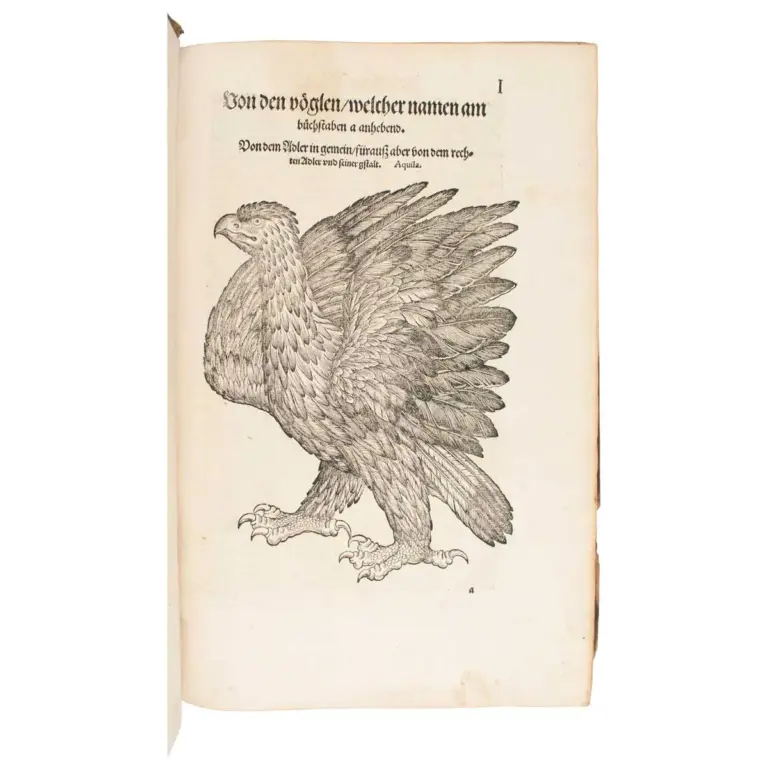
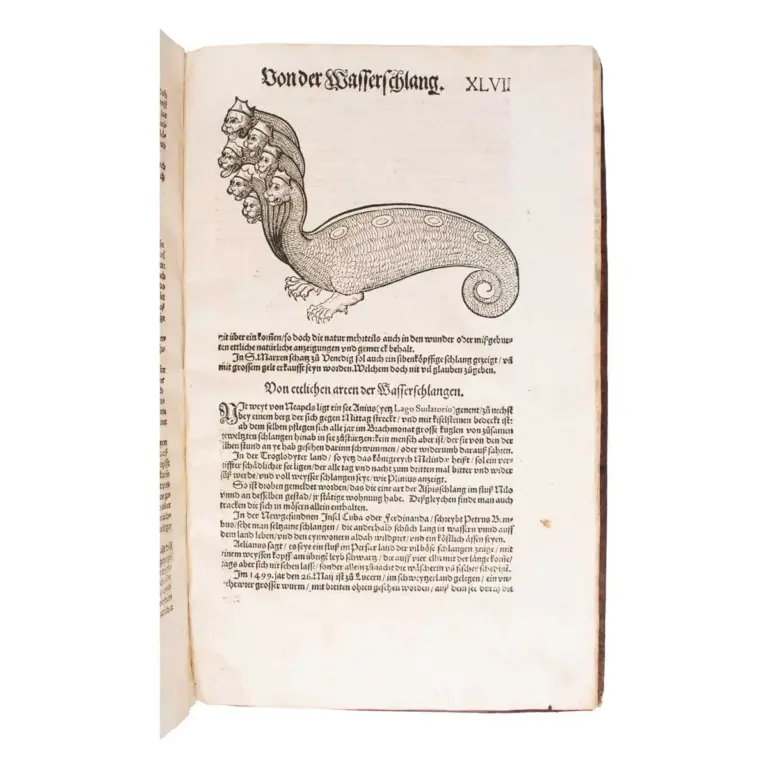
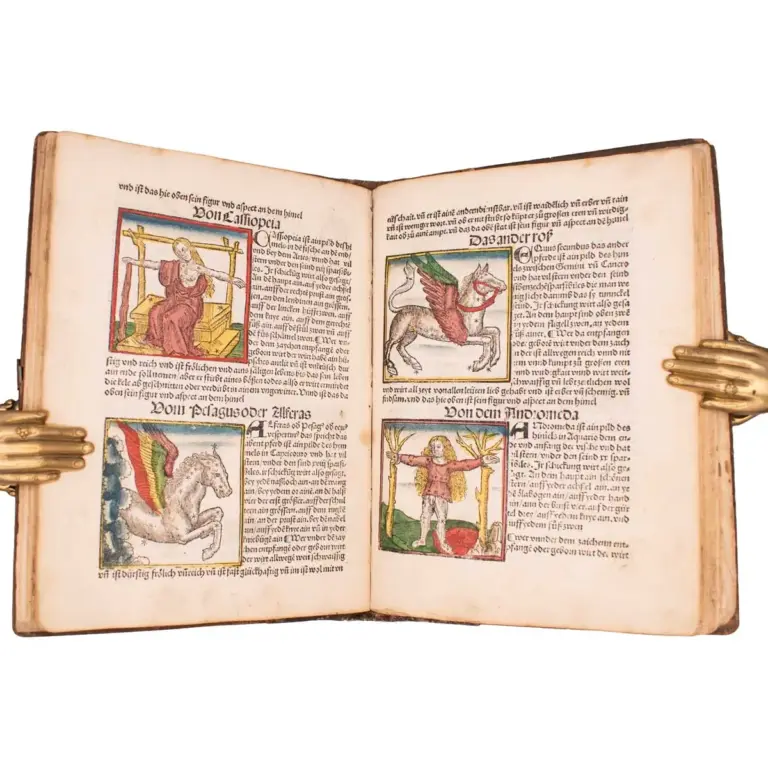
First printed in Mainz by Jacob Meydenbach in 1491. The two fine full-page woodcuts by a Venetian artist appear here for the first time. Both are surrounded by elaborate ornamented floral borders, white on black ground. Among the woodcuts features what is probably the first depiction of oil collection: petroleum is described and a woodcut shows it pouring from a rock and being collected in a vessel. In addition to many plants and animals—from the prosaic (worms, snails, frogs) to the fantastic (mandrakes, unicorns, mer-people)—the woodcuts contain many compelling and charming scenes of Medieval life. These iconic images were much copied, not only in other scientific books but even making their way into other genres, such as Grüninger’s illustrated edition of Horace (in which Maecenas is attacked by giant garlic cloves obviously copied from the woodcut here).
Two full-page cuts depict physicians in consultation, one based on that in Ketham’s Fascicolo di medicina, the other repeated from a 1504 Venice edition of Guillelmus de Saliceto, Chirurgia. Original to this edition, as a supplement to the section De urinis, is the pseudo-Galen tract De facile acquisibilibus. Composition was divided between Benalius’ and Tacuinus’ printer shops, the former setting 30 of the quires, and the latter 28. The fine four-part title-page border with dolphins was part of Tacuinus’ stock, first used by him a few months earlier for his edition of Vitruvius. Mortimer calls it “one of the most influential pieces of [book] ornamentation of the sixteenth century, being copied in several formats by many other Renaissance printers”.
The Hortus sanitatis, in its many editions and translations was the most popular and influential herbal of its time, and served as an encyclopaedia of the plant, animal, and mineral kingdoms and the medical applications of their products.. The most interesting of the new cuts are some of the genre pictures (especially those to the parts on zoology and mineralogy), for the draughtsman worked on these more individually with regard to the costumes, which represent those in use in Alsace at that time. The woodcut of the human skeleton appears here for the first time in an edition of the Herbals, and was added to nearly all the following Latin, French, and also to some German editions of the Hortus up to about 1540. This skeleton picture… represents, from a graphic viewpoint, the best that was published of this kind before Vesalius. ‘Many of the genre cuts derive from images on playing cards. The large woodcut of the skeleton is taken from Brunschwig’s Chirurgia.
Choulant Inc. 18, pp. 64; Schreiber XXV; Adams H-1016; Durling 2468; Essling 1723; Hunt 1:12; Mortimer Italian 238; Nissen BBI 2368; Sander 3470.