 Marshall Rare Books
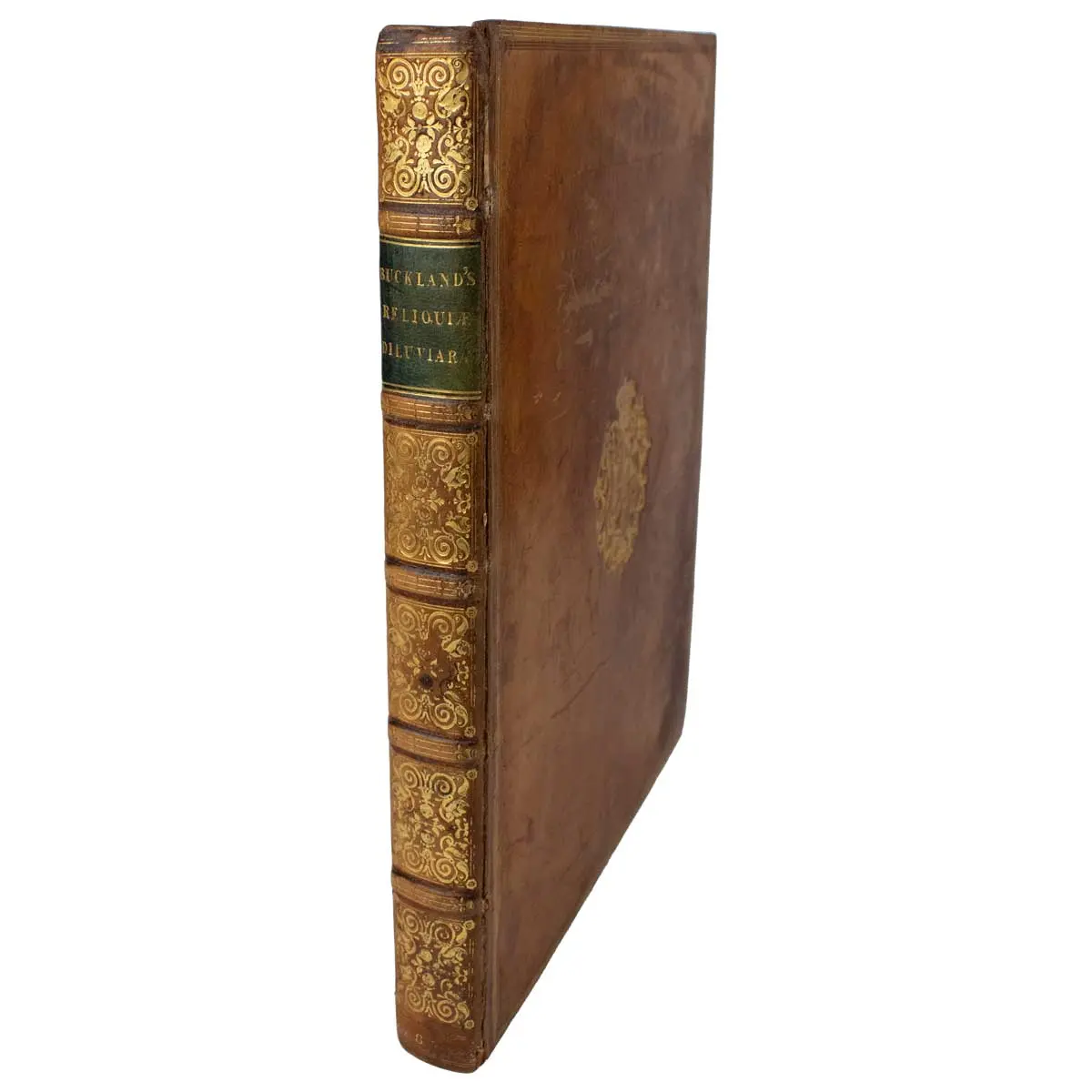
First edition of the first book in English on the Palaeolithic Age.
FIRST EDITION, 27 engraved and lithograph plates, including 4 folding maps (3 coloured),slight offsetting, occasional light spotting, marbled endpapers, contemporary calf gilt, with gilt coat of arms of John Frederick Campbell, 1st Earl Cawdor to boards, spine gilt, green morocco label to spine, all edges marbled, 4to, John Murray, 1823.
First edition of the first book in English on the Palaeolithic Age. Buckland’s great scientific work outlined his arguments that the evidence of geology alone demonstrated that a great flood had covered the entire globe during the time of Noah. This work established his reputation as a scientist.
Buckland’s focus in Reliquiae Diluvianae was twofold: to establish “that there has been a recent and general inundation of the globe,” and to establish the nature of the native fauna at the time of the flood. After he summarised his own research and reviewed that of several other geologists, Buckland concluded that there was “the strongest evidence of an universal deluge”.
William Buckland is remembered as the first man to identify and name a dinosaur (although the name dinosaur had not yet been coined by Richard Owen). This was the megalosaurus. He pioneered the use of fossilised faeces in reconstructing ecosystems, coining the term coprolites.
Provenance: John Frederick Campbell, 1st Earl Cawdor (1790-1860), British peer, MP and Fellow of the Royal Society.
Books you may also like
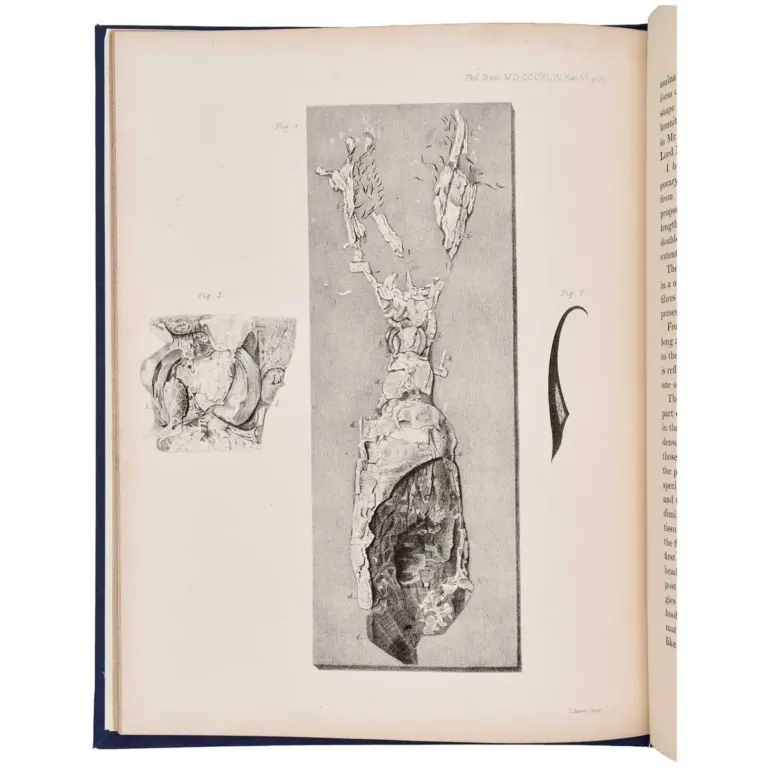
A Description of certain Belemnites, preserved , with a great proportion of their soft parts, in the Oxford Clay, at Christian-Malford, Wilts
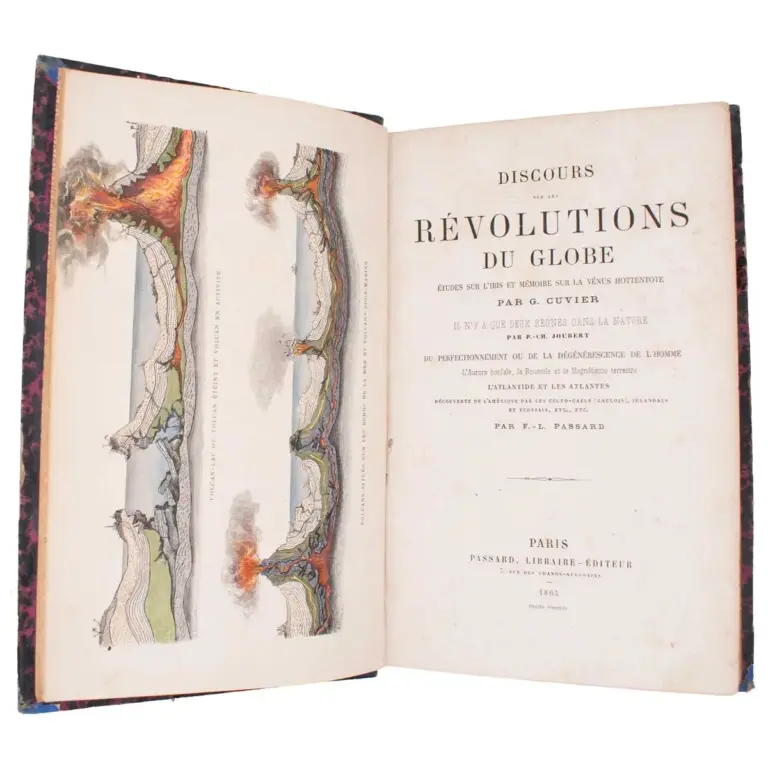
Discours sur les Révolutions du Globe…
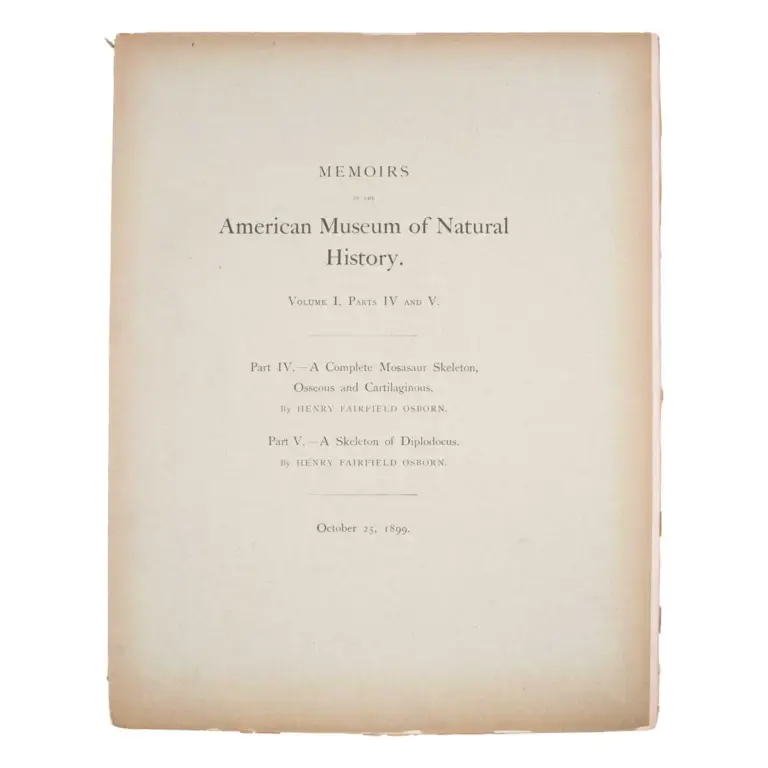
Memoirs of the American Museum of Natural History. Volume I, Parts IV and V. Part IV. — A Complete Mosasaur Skeleton, Osseous and Cartilaginous. Part V. — A Skeleton of Diplodocus.
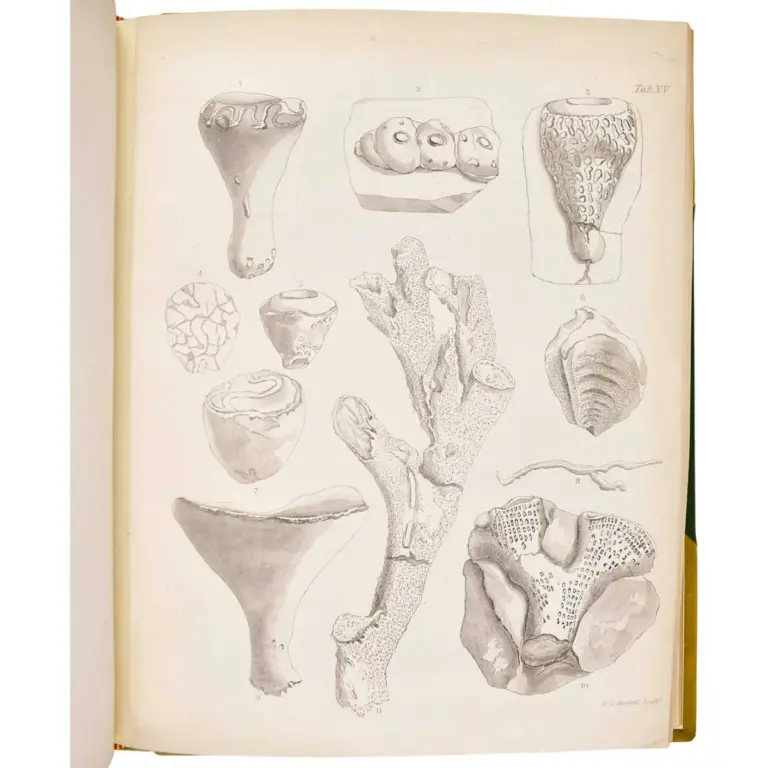
The Fossils of the South Downs; or, Illustrations of the Geology of Sussex
The Silurian System, Founded on Geological Researches in the Counties of Salop, Hereford, Radnor, Montgomery, Caermarthen, Brecon, Pembroke, Monmouth, Gloucester, Worcester, and Stafford